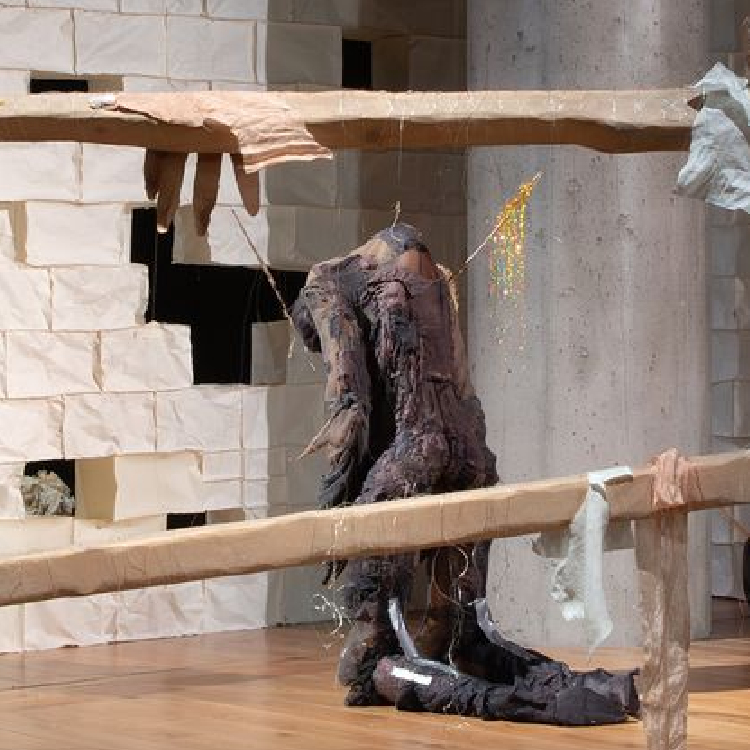
Gabriel Kidd: I found the giant and he was dead
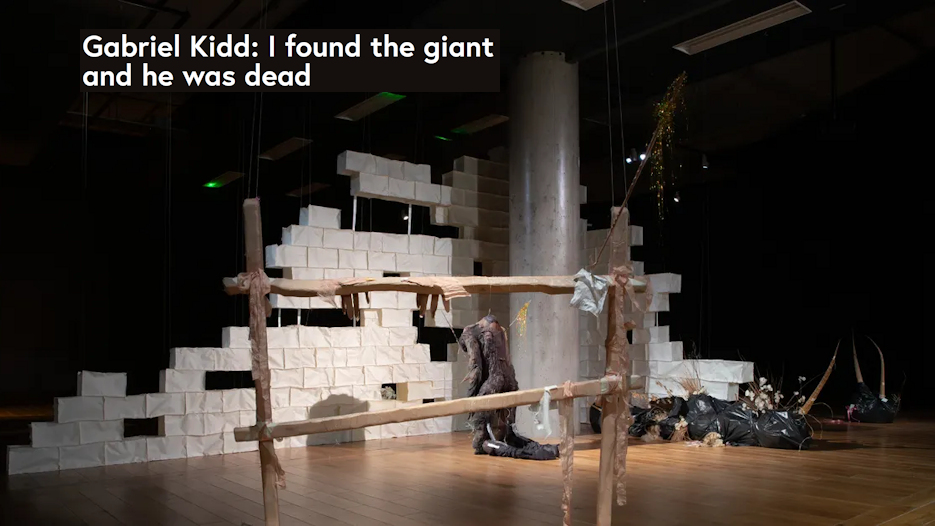
Through sculpture, drawing, sound, and writing, Kidd’s work utilises queer tactics of parody, fluidity and vitality, to explore mythology, ecology and history.
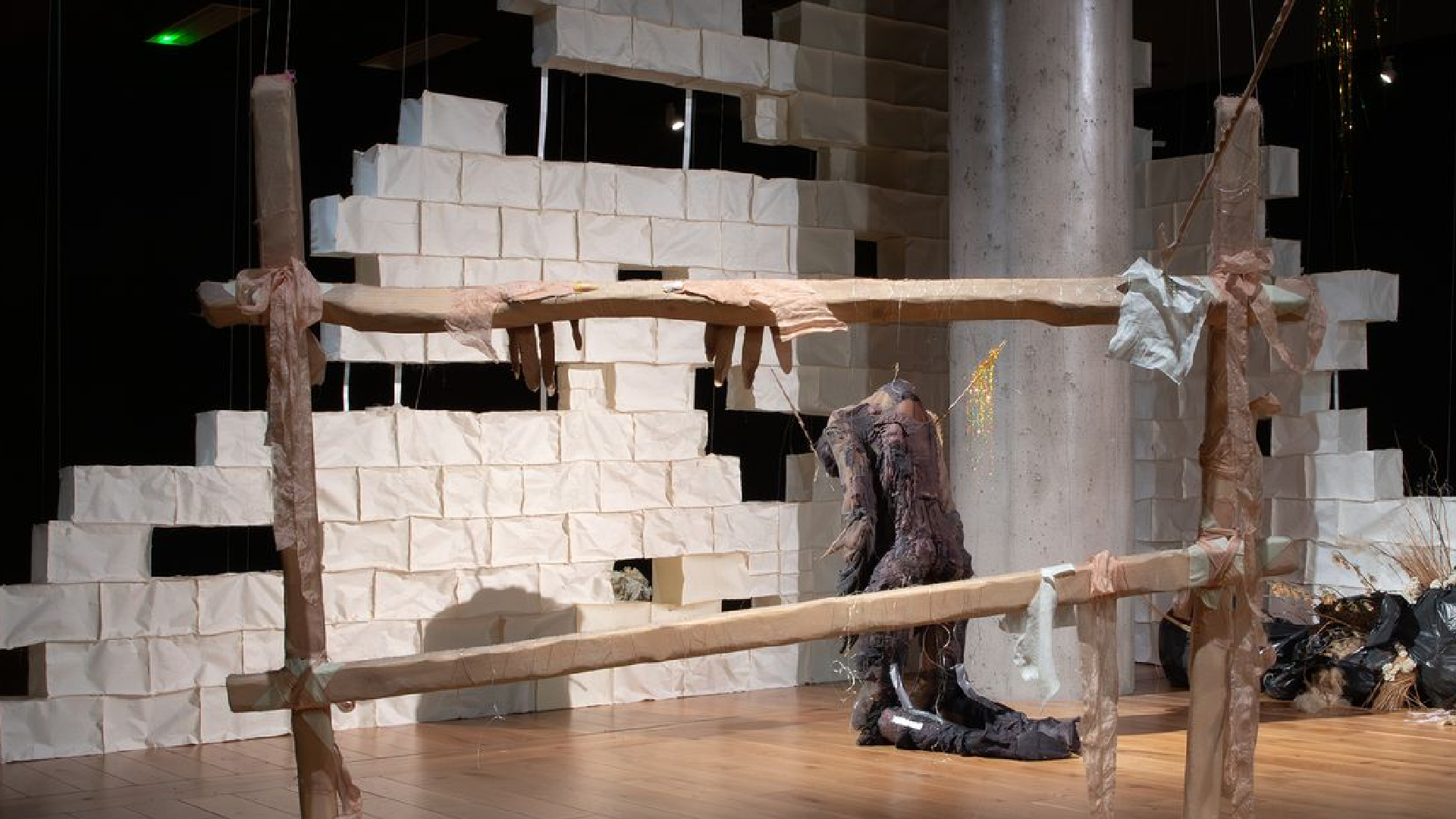
In Gabriel Kidd’s first institutional solo show, they have created an immersive work of figurative and sound pieces inspired by local folktale, landscape, erosion, and medieval notions of time. Naturally dyed silk (with weeds, wayside trees or healing herbs), whittled pine arrows, poured/cast latex skin and eggs, and Kozo paper architectural forms are painstakingly crafted and stitched together with mass produced sequins or acrylic nails. In a series of vignettes, emotionally suggestive human forms appear in the ruined remains of a hilltop domestic dwelling.
Private moments between figurative sculptures are drawn out through the reimagined folktale of two giants, Alderman and Alphin (from the valley of Greenfield, Saddleworth) who become embroiled in a tale of friendship, love, jealousy, revenge, and loss. Husk-like in their fragility, Kidd’s figures - queer, camp, decaying, putrid, oily, beautiful - commune in indeterminate dialogue. A unifying soundtrack developed in collaboration with organist and composer Willow Swan, creates a disquieting ambience. Church organs, phone recordings of techno music, field recordings of wind, water and rain, come together to underscore the installation as a site of aftermath and memory.
The relationship between interior and exterior worlds is explored throughout the work. Through gestures and signals performed in gay cruising culture, the poised, slouched, or side-lying, the figures invoke a knowing desire, blurring a sense of individuality, empowerment, and destruction. A series of windows, slits and sightlines carved from antique wood suggestive of medieval church squints, surround the gallery walls. Treated with the same fleshy materials as the bodies, they imbue the architecture of the building with the same viscous physical and psychic properties.
Materials, their provenance, cultural, social, and political significances, are important to Kidd, woven into queered perspectives on natural process, religion and gay culture. The work challenges the notions of permanency, monumentality of traditional sculpture, and gender-essentialism. In this work, traditional understandings of sexuality, gender and identity are powerfully subverted through instances of fragility, precarity and not-knowing, finding resilience through transition and the natural evolution of materials.
Gabriel Kidd: I found the giant and he was dead Tickets
Sorry, there are no tickets for Gabriel Kidd: I found the giant and he was dead in Manchester available at the moment. This maybe due to one of the following reasons:
- - Gabriel Kidd: I found the giant and he was dead in Manchester tickets are currently not on sale.
- - The event has sold out.
- - Details have not yet been announced for Gabriel Kidd: I found the giant and he was dead in Manchester.
- - The event may have been cancelled.
- - The event has been and gone.
Join our free mailing list for
updates about this event
Gabriel Kidd: I found the giant and he was dead ON TOUR
Most Popular Shows and Events in Manchester
Murder Trial Tonight V - Death in the Family
Pyramid and Parr Hall
Thu 1 - Fri 2 Apr 2027


Jesus Christ Superstar starring Sam Ryder
Palace Theatre
Thu 11 - Sat 27 Feb 2027
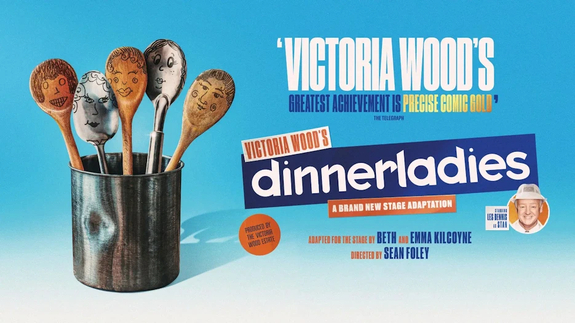
Victoria Wood's Dinnerladies
Manchester Opera House
Tue 26 Jan - Sat 6 Feb 2027




Candlelight - Hans Zimmer's Best Works
Manchester Cathedral
Thu 1 Oct 2026 - Fri 19 Feb 2027
Back To The Future The Musical
Manchester Opera House
Tue 13 Jul - Sat 21 Aug 2027