Manchester Theatre News & Reviews
REVIEW - New Dawn Fades is a Venn Diagram of (Un)known Pleasures
 BOOK YOUR TICKETS HERE
We were invited to Lowry to see a play about Joy Division and Manchester. Read what our reviewer Neil Jones had to say about New Dawn Fades...
There are not many bands who have had their story told in two highly celebrated biographical movies, an acclaimed cinematic documentary, and a long-running hit stage play. But then again, Manchester's Joy Division are no ordinary band.
I have been meaning to catch New Dawn Fades since it first premiered at the Manchester Fringe Festival in 2013. The stage play about the influential Mancunian post-punk legends, who went on to become New Order, always seemed to be touring whenever my diary had me elsewhere. Its subsequent national tours, which have seen it grace the stages of the region's theatres ever since - their capacities growing with every passing year - were now a far cry from that first night at The Lass O'Gowry pub.
Tonight (and for the rest of the week) it returns home, with a sold out performance at Lowry's Quays Theatre. The audience is largely made up of couples in their late 50s or early 60s, many wearing their Joy Division or New Order t-shirts. Indeed, looking at the demographic, I suspect that while some might have seen the show before, many were probably fortunate enough to attend one of the band's numerous legendary Manchester and Lancashire gigs, between 1977 and 1980 , or at least one of the New Order or Peter Hook & The Light line-ups since.
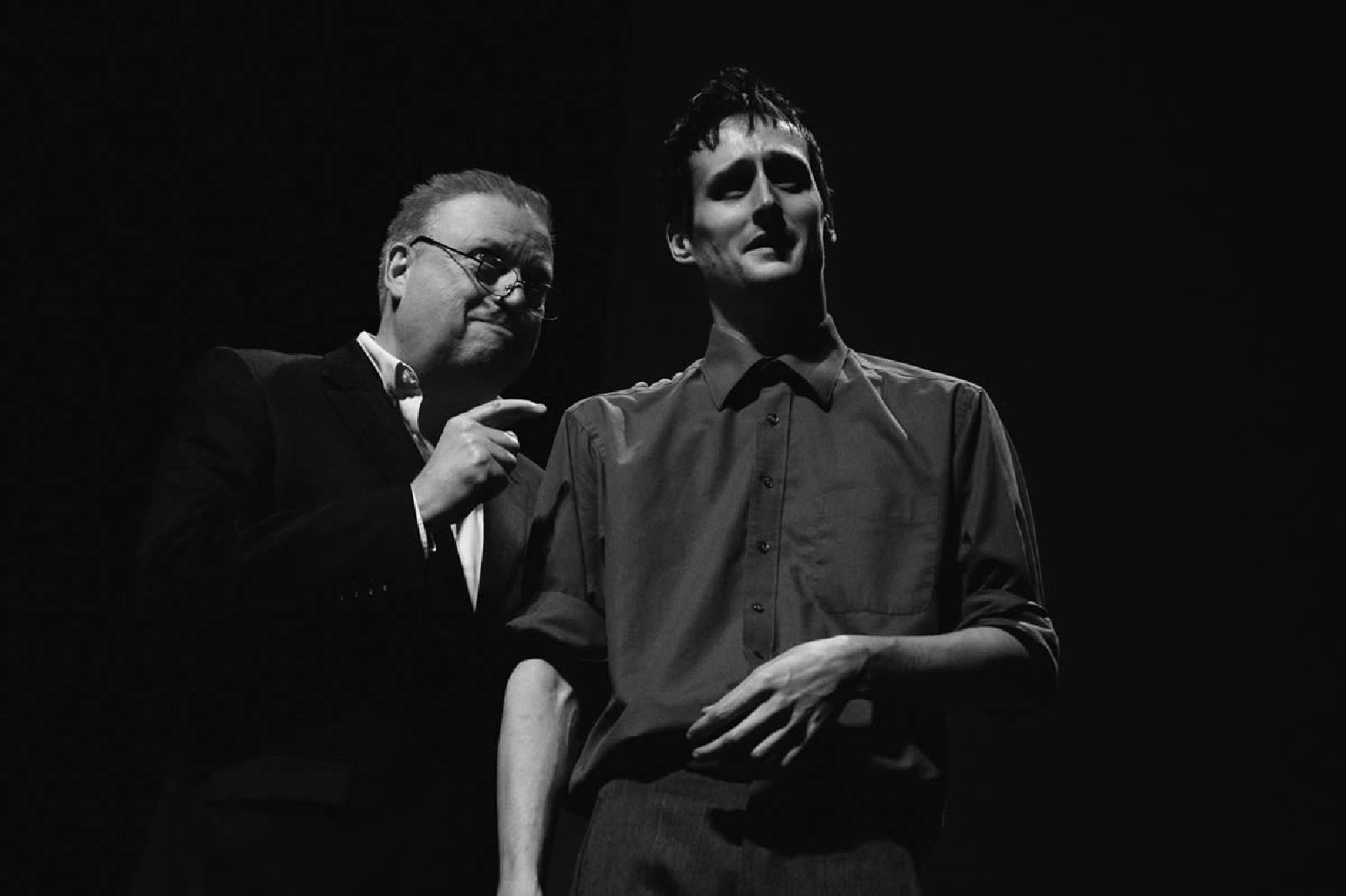
For most of the audience, it would probably be true to say that a trip to the theatre would normally be to watch a music concert rather than a drama play or a musical, but tonight, they were in safe hands. This production has pedigree. It was written and co-directed by Brian Gorman, who also plays an uncanny version of Anthony H, Wilson, the late Granada TV icon and Factory Records boss, who acts as the narrator of the piece, driving the story forward with the Salford-born, Marple-raised, Cambridge-educated broadcasting legend’s trademark humour and self-effacing, pretentious style.
The producers also have rich Manchester musical lineage. Tony Davidson, the man who introduced the world to Mick Hucknall in 1979, owned the legendary TJM Rehearsal Studio and record label in Castlefield, where many of the most famous names in Manchester’s rich music history practiced and recorded, including Joy Division who shot their famous video for “Love Will Tear Us Apart” there. His co-producer Nigel Carr set up and edits the brilliant Louder Than War website, magazine, radio station and record label with famous musician, journalist and author John Robb.
It’s rather fitting that the staunch socialist, who was known as “Mr. Manchester”, narrates the play, as much of the script gives the audience a history of the city - with brief vignettes covering its Roman beginnings to Hanging Ditch, Peterloo and Marx & Engels, taking in The Free Trade Hall and Peel Park, the Electric Circus and Factory Records. With his infamous excessive civic pride, he walks us through its many famous streets and venues, past and present, with plenty of added pointers specifically for the performances at Lowry; highlighting the places in Salford which are literally a stone’s throw away - with plenty of cheers when his beloved United get a namecheck, and laughs when Factory manager Rob Gretton’s favoured City get a humorous shout out. There’s even a brief interlude to show an old PG Tips chimpanzee advert from the era, although there’s no mention that the popular teabags were created in Manchester, in 1930, by Brooke Bonde, the famous Manchester tea merchant who first opened a teashop on Market Street in 1869. To this day, the teabags are still made in Trafford Park, just across the water from the theatre.
It seemed a missed opportunity that, among the many tenuous links which served to draw a line between Manchester's past to Joy Divison's formation and lyrics, there was no mention of the Sufragettes despite - just like the band - the militant campaign for Votes for Women could trace its roots back to the Free Trade Hall, following Annie Kenney and Christabel Pankhurst's arrest for disrupting a Liberal Party meeting in 1905. Not to mention, the band had also controversially taken their name from the brothels set up in Nazi concentration camps during World War II, in which at least 34,000 female inmates were forced into sexual slavery.
On a personal note, one early joke hit home hard, as he introduced himself to the audience - not that he was unknown to anybody in the auditorium, “You can call me Anthony, you can call me Tony, but please don’t call me a twat!” - a reference to what Ian Curtis had called him on their first encounter. I had also done likewise in front of 500 people during a very public game of “Who Am I?", at the Comedy Store - when, after “Mother Teresa” and “Shaun William Ryder”, his own name appeared on the big screen above his head. Even though he instantly guessed the answer correctly, he looked physically shaken and upset at the crude insult. It turned out he wasn’t as thick-skinned as he came across on TV. Over the next five years, I would often bump into him on his daily walk along the towpath in Castlefield with his beautiful Weimaraner dog, William - the same breed as appears in New Order’s "Blue Monday '88” video. Seeing him growing more and more gaunt as his kidney cancer took over, yet remaining ever charming to literally everyone whom he encountered, I regret to this day never actually reminding him of the occasion and apologising for my insulting clue. He passed away, aged 57, in 2007 leaving a legacy that few in Manchester’s 2,000 year history have matched.
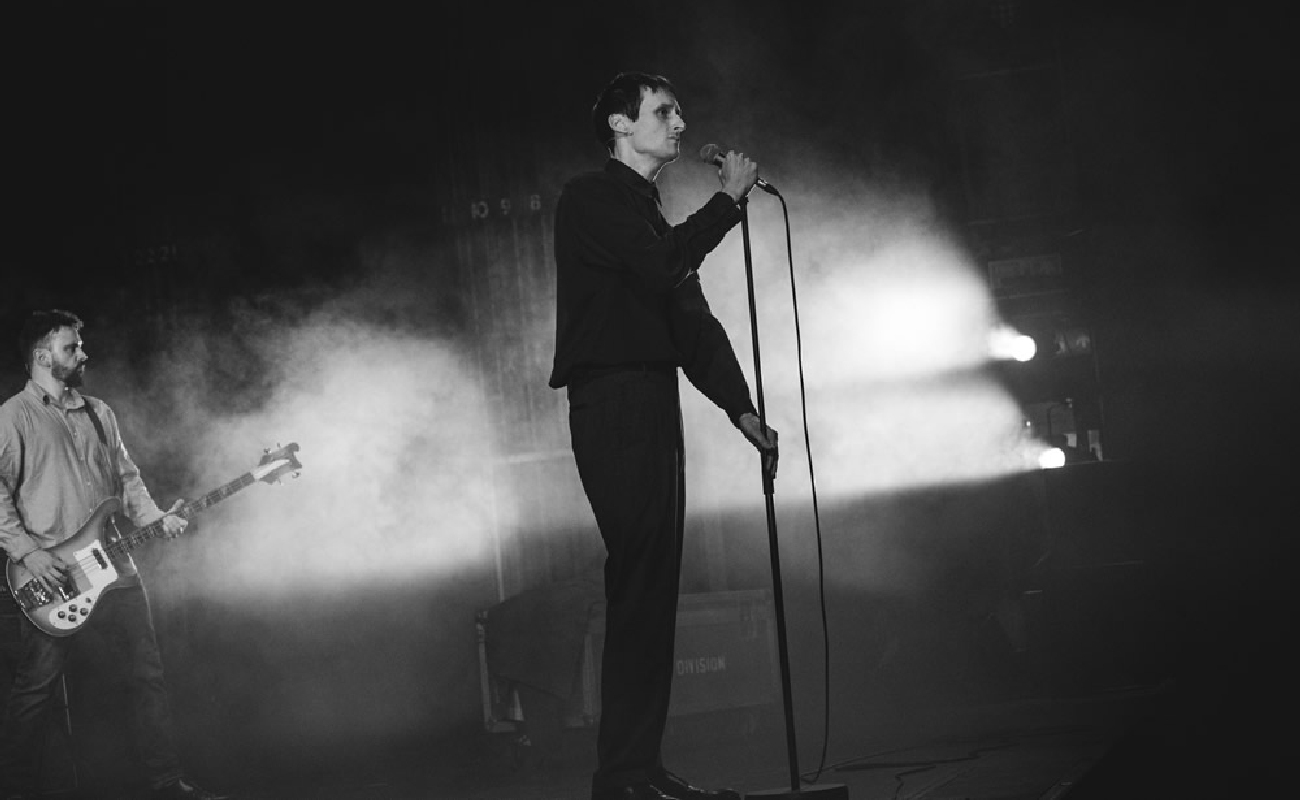
While Anthony H. Wilson’s own story is a major part of New Dawn Fades, the central character is of course Ian Curtis, whose tragic life story is told, along with Joy Division’s musical history by eight actors, who between them perform twenty one different characters - ranging from Tony and Ian, with bandmates Bernard Sumner (played by Garient Lyons), Peter Hook (Gaz Hayden), and Stephen Morris (Jack McGarry). Ian’s wife Debbie is brilliantly played by co-director Lauren Greenwood, while Kivan Dene and Nicholas Eccles hilariously split the roles of, among others, manager Rob Gretton, producer Martin Hannett, photographer Kevin Cummins, journalists Paul Morley and Mick Middles, and some of Tony Wilson’s more unlikely interviewees on Granada Reports: Roman General Agricola, 16th century occultist John Dee, Friedrich Engels, and Shelley (both Percy and Pete).
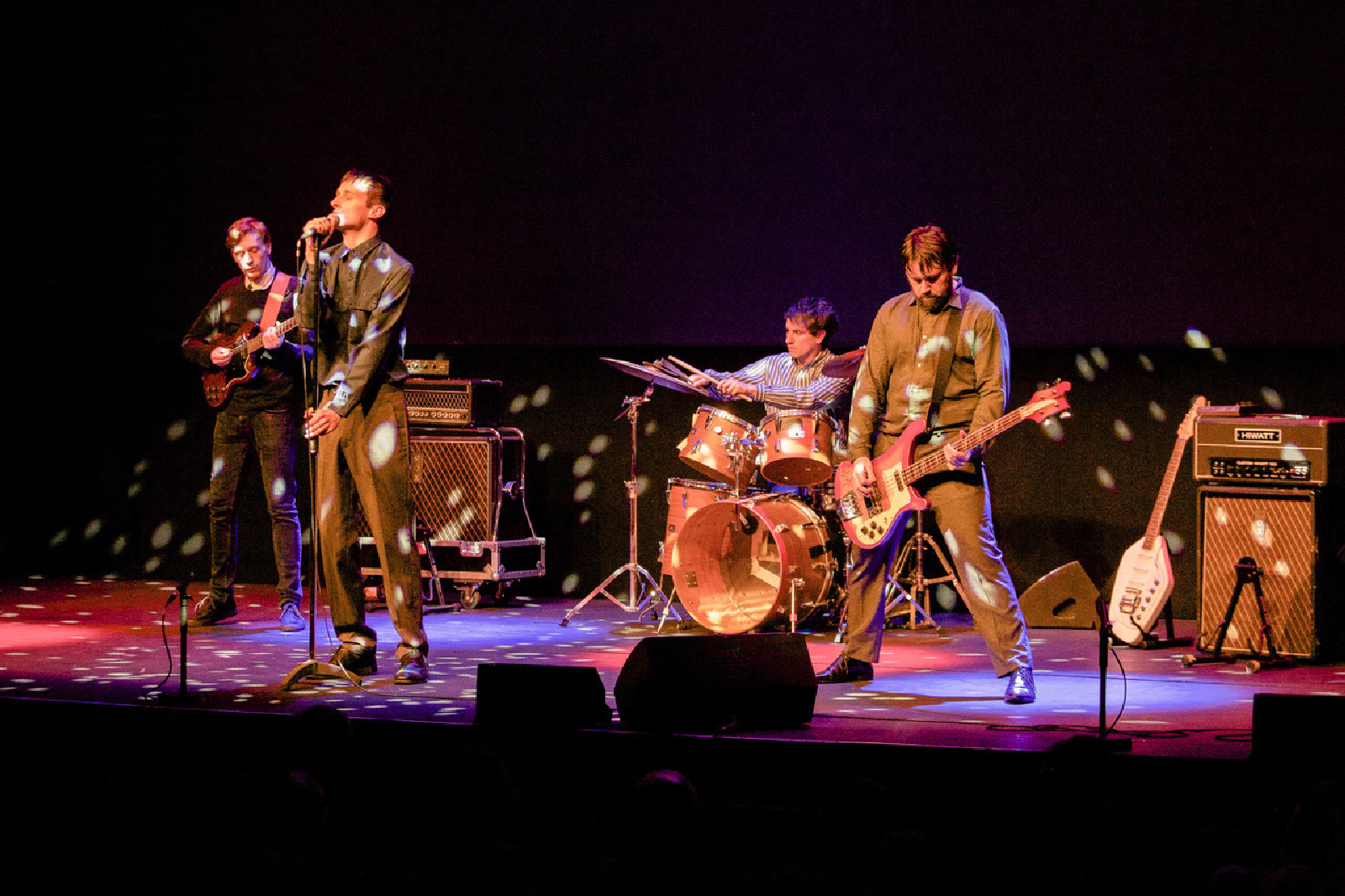
The period costumes, musical instruments and band’s studio equipment are impressively accurate and, as you can imagine, there are plenty of laughs throughout to balance the sombre subject matters of epilepsy, depression, marriage breakdown and, of course, suicide - all of which are dealt with so sympathetically you could hear a plectrum drop in the virtually sold-out 460 capacity auditorium.
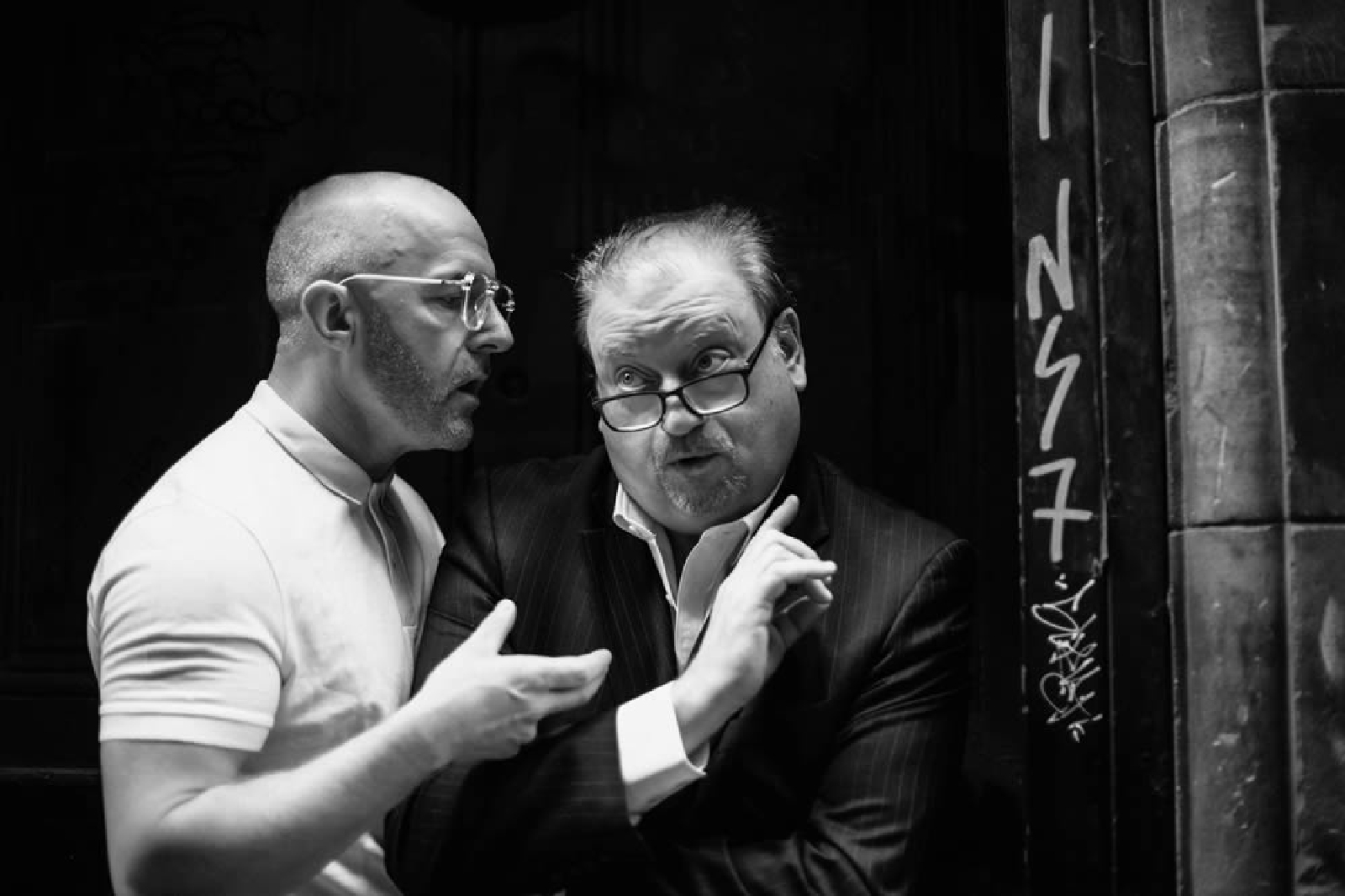
If you have seen Michael Winterbottom 2002 classic Mancunian film 24 Hour Party People, and Anton Corbijn’s 2007 biographical masterpiece Control, or the extraordinary 2007 documentary Joy Division, let alone read many of the superb books about the band and Factory Records, you will already be familiar with the hilarious iconic quotes and jokes - whether accurate or embellished in Tony’s typical fashion - which spilled out of the madhouse combination of pretentious wordsmith Wilson, the blunt and foul-mouthed Gretton, and the spaced-out genius of Hannett - not to forget the passionate but permanently grumpy Peter Hook, whose continued animosity towards his former bandmates makes Roy Keane and Morrissey look like Sally Hawkins’ character in fellow Salfordian Mike Leigh’s Oscar-nominated Happy-Go-Lucky.
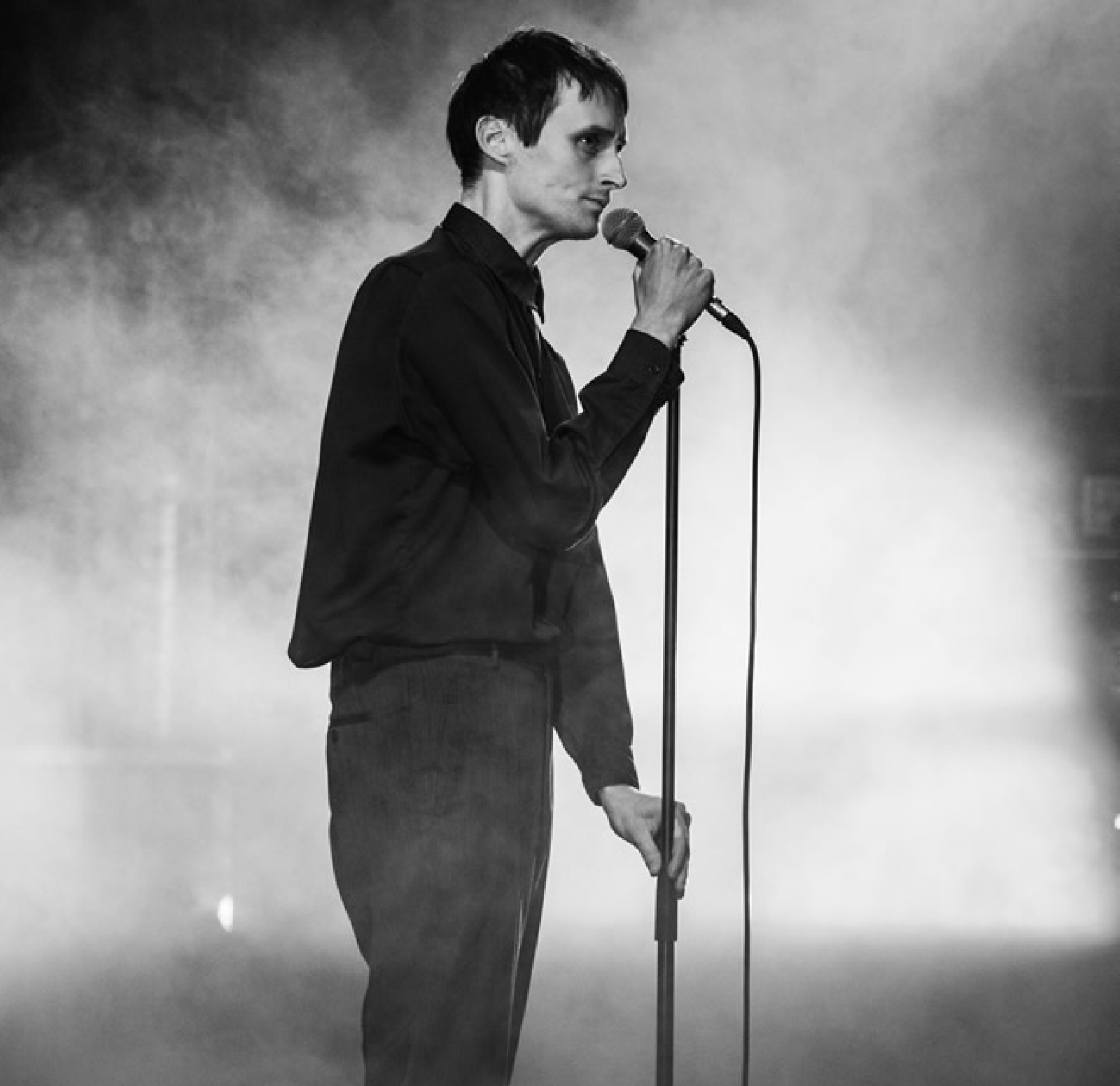
Aside from the laughs, Josh Lonsdale is absolutely superb as Ian Curtis, and ranks alongside Sam Riley and Sean Harris for his accurate portrayal. Not only does he physically resemble the iconic lanky Stretfordian, but he recreates his mannerisms and famous dance moves to a tee, even perfectly singing live vocals to the surprisingly few songs used in the play. While it comes as no surprise that Ian Curtis was his idol as a teenager, it is astonishing to think that he came to this role as an actor at Venice’s Teatro Stabile, rather than via one of the many Joy Division tribute bands which sell out venues across the globe.
Although there are semi-live performances of just four Joy Division songs (the instrumental pre-recorded) and narrative background tracks from the likes of Mott The Hoople, David Bowie, Roxy Music, Bolton’s Buzzcocks, Bury’s Peter Skellen, and even James Bond, the shortage of songs is perhaps one of the most obvious quibbles with New Dawn Fades. Not only did the music journalist sitting next to me comment on the fact, but I also overheard a fan query it with one of the producers at the merchandise stall afterwards. The reply he received was: “Because it’s a play, rather than a concert, I feel the story is stronger for it with less music.” I could agree with that explanation to a certain degree, especially when telling Ian and Debbie’s heartbreaking story, but it also raises a big question of who the play is actually aimed at.
In the opposite way to how the 2018 multi-Oscar-winning Freddie Mercury biopic Bohemian Rhapsody irked die-hard Queen fans for its many inaccuracies, which went unnoticed by the vast majority of the millions of people who made it the highest grossing biopic of all time, New Dawn Fades perhaps suffers from trying to be far too accurate - almost like an acted Wikipedia entry at times - concentrating on every little detail, including the names of all the drummers they went through in 1977 before settling on Stephen Morris, or the exact dates of specific concerts or record releases.
For the average theatregoer, a lot of this is not needed and arguably slows the flow of the story down at times while making it more contrived as a result. It also unnecessarily highlights the parts where the story switches back and forth chronologically. For example, the end of Part One ends with a brilliant rendition of Shadowplay, recreating Joy Division's performance on So It Goes, on the 20th September 1978, with Stephen Morris on drums. But then Part Two confusingly skips back to 1977 and the founding of both Factory Records and TJM Studios, with the band still searching for a drummer having hilariously sacked Morris’s predecessors.
Like Bohemian Rhapsody, it’s these tiny details which actually serve to separate the enjoyment for die-hard fans from seasoned theatre goers into very specific parts of the venn diagram. While it tries to offer something for everyone - a mix of Control and 24 Hour Party People - your overall enjoyment of the play will likely depend on which set you fall into. Throw into the equation the history of Manchester too - which is certainly of interest to tonight's audience of proud-Mancunians and Salfordians (there is a difference, as Tony Wilson points out) - but it perhaps possesses too much of an annoying cocky Tony Wilson/Ian Brown/Liam Gallagher/Aitch & Angry Ginge Manc swagger for non-locals, leaving a very niche intersection, in to which I thankfully fell. Not that you need to be in the middle of that intersection to enjoy the show of course, and you will certainly find known or unknown pleasures regardless of your familiarity with the story.
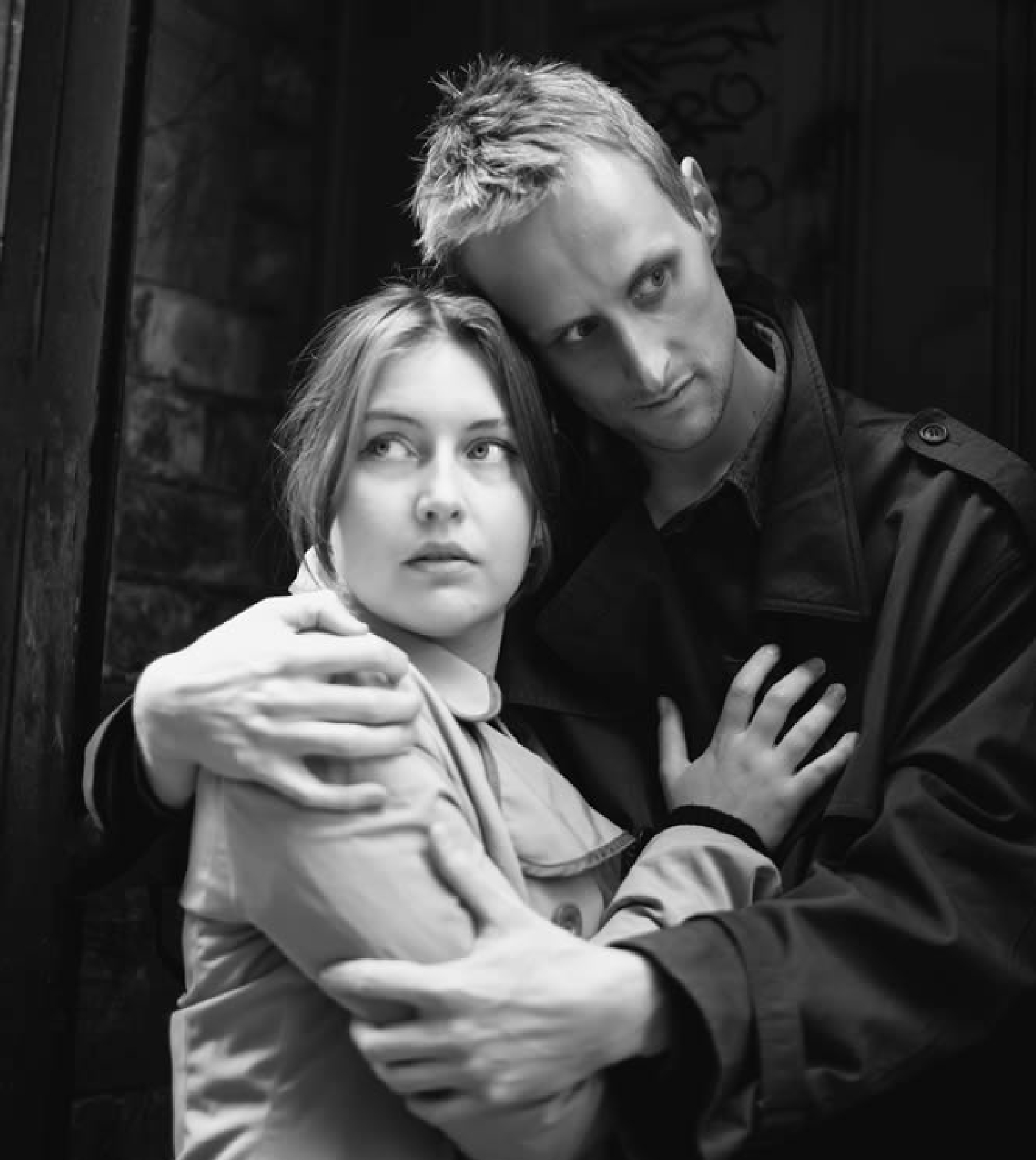
During an emotional scene, where Ian and Debbie are discussing their painful divorce, a strong smell of marijuana wafted through the Quays Theatre, an unusual occurrence for such a venue, which I took as validation that some people were here for a gig, rather than a drama play. As the smell grew more and more obvious around the auditorium, the inquisitive chatter and irritated coughing among the audience started to detract from the estranged couple’s heartbreaking conversation and awkward silence on the stage, which was key in leading up to the Final Act. It was only when Debbie later told Ian that he had to stop laying around smoking weed all day, that people started to realise the smell was perhaps an unexpected piece of interactive theatre purposely created from the stage - and which audience members would also get to take home with them in their hair and on their clothes. Either that, or it was a brilliant piece of improvisation from Lauren Greenwood. If this was indeed part of the show, it highlighted the need for more props, as the actors throughout the show had mimicked smoking invisible cigarettes, drinking from glasses, handling their vinyl singles, and answering the telephone; a sign of the show’s humble amateur beginnings in less professional venues.
By the time the coughing had stopped, we were at the horrific ending of Ian’s story. Acted with such grace, Brian Gorman had approached the scene so respectfully, using Ian’s own poignant lyrics to paint the scene. While he had left the graphic events to the imagination, it was still obvious to those with no prior knowledge, yet still included subtle nods to Werner Herzog’s Stroszek and Iggy Pop's The Idiot for those die-hard fans who will never be able to hear the two in the same way they had before 18th May 1980.
After a huge applause - with plenty of fans in Joy Division t-shirts offering a standing ovation - there was just time for a jukebox musical encore of Love Will Tear Us Apart, complete with photos on the big screen of the real people who had inspired the show. The reaction was even bigger, and everybody seemed to leave satisfied, regardless of where in the venn diagram they fell (or how much their clothes now smelt of weed).
WE SCORE NEW DAWN FADES...
New Dawn Fades is on at Lowry, Salford until Wed 4th March 2026.
BOOK YOUR TICKETS TODAY!