Manchester Theatre News & Reviews
How Do You Do?... Later Youth
 ~ Buy Later Youth Tickets ~
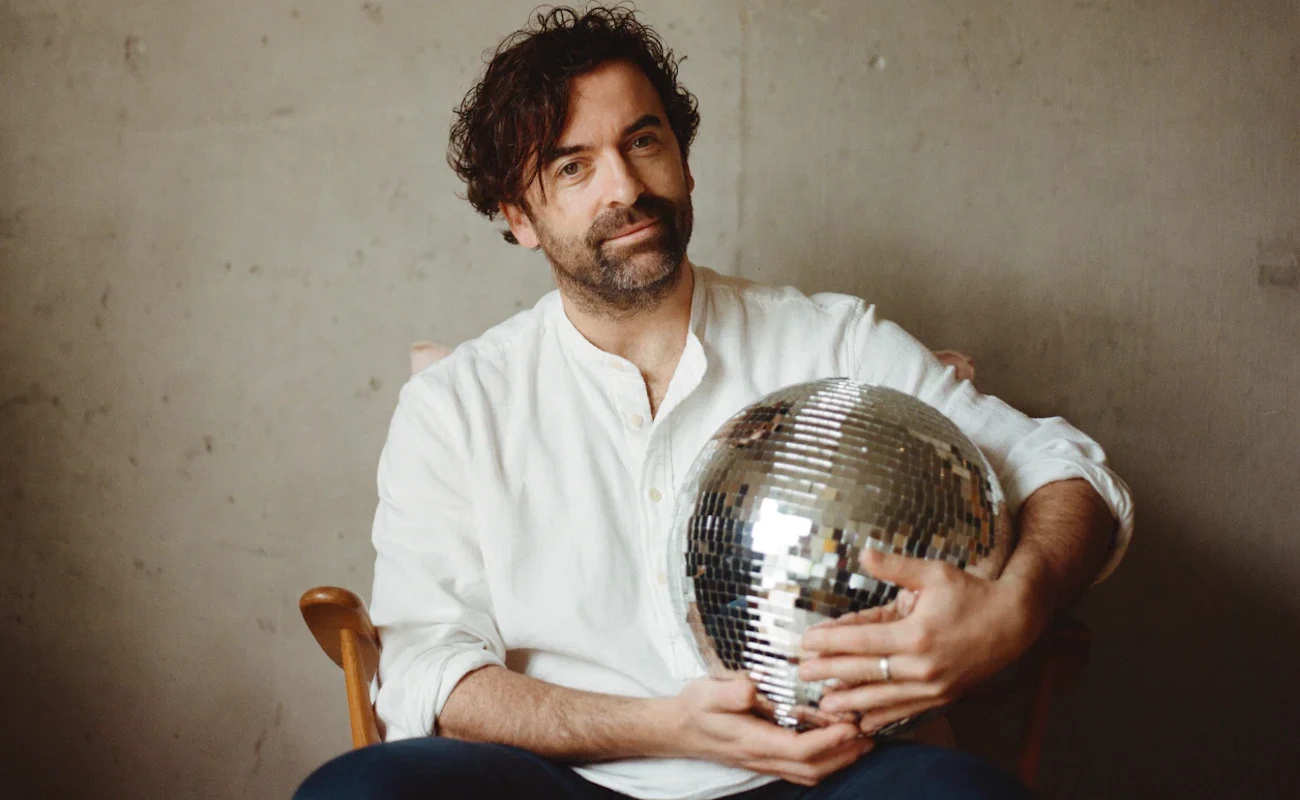
In the fourth edition our new How Do You Do? series of interviews, which aims to introduce the stars of the Manchester music scene to a wider audience, we catch up with Later Youth, the alter ego of The Travelling Band co-frontman Jo Dudderidge ahead of his upcoming show at Kamera Ballroom.
One of, if not the, most underrated Manchester acts, folk rockers The Travelling Band were formed in Manchester in 2006, and were key players in the local scene hosting their "Sideways Saloon" and "Shut The Far Cupboard" acoustic live music nights at the sorely missed Odd bar in the Northern Quarter and Odder on Oxford Road.
With the band on an extended hiatus since 2017, Jo has reappeared in his current guise as Later Youth, a pop rock project centred around his signature electric Wurlitzer piano.
How do you do, Later Youth?...
First up, where are you originally from and where is home in Manchester?
I was born in London, grew up near High Wycombe. After a couple of years in Salford I lived all over south Manchester in my early 20’s and then settled in the Northern Quarter where I lived for ten years..
And what brought you here in the first place?
Studying music at Salford University.
Are you a Red or a Blue?
I'm actually a Spurs supporter.
That's a rarity in Manchester. Do you know any other Spurs supporters in Manchester?
My mate Dean Taylor who runs a great restaurant called Stretford Canteen and that’s about it!
What's you relationship like with United and City fans? Before and after you beat United in the Europa League Final in Bilbao?
Bilbao was a great experience but beyond one annoying kid who jumped up and down in my face before the game, there was no trouble. In fact I let a couple of Reds stay in my hotel lobby when they couldn't get a cab. It was all relatively graceful and there’s definitely some respect between the two clubs who historically have played attacking football.
And how do you like your Vimto?
Hot in the winter, cold and fizzy in the summer.
When you’re at the chippy, what do you call chips on bread?
A chip barm of course!
What is your favourite place in Manchester?
Wellington House, Pollard Street East. A big mill full of creatives - what Manchester is all about. I wish they’d fix the roof though.
What's your favourite song by a Manchester artist?
Balcony Doors by Jo Rose.
[Later Youth would go on to cover the song at their Manchester gig];
And who would you crown King and Queen of Manchester?
Guy Garvey and the poet Carol Batton.
We can’t really interview you without talking about your lineage. Your father, Phil, was sound-engineer for Led Zeppelin and created the Soundcraft mixing console before going on to chair Focusrite – the company behind ADAM audio, Novation, and Sequential, among other famous recording equipment brands. Were you surrounded by rock stars growing up and how influential has your dad been in your career?
Both my folks have been very encouraging of my career choice and love coming to gigs when they can.
By the time I was growing up, my Dad had been off the road for a few years so there was less rock n’ rollers around and it was more shadowing him at the trade shows where I got to meet all the people who made studio gear. That certainly got me into recording, although my Dad encouraged me more as a songwriter as that’s where my talent was early on.
My passion for recording and production developed a bit later, once I had studio experience. My only regret is that I didn’t record with a few more of the legends he knew who aren't around anymore, like Sir George Martin and Elliot Mazer. He did introduce me to Rolling Stone’s producer Chris Kimsey though and we recorded with him, with my first band The Deadbeats, at Konk Studios which was an amazing experience.
Has he ever caught you using a competitor brand?
Haha, probably.
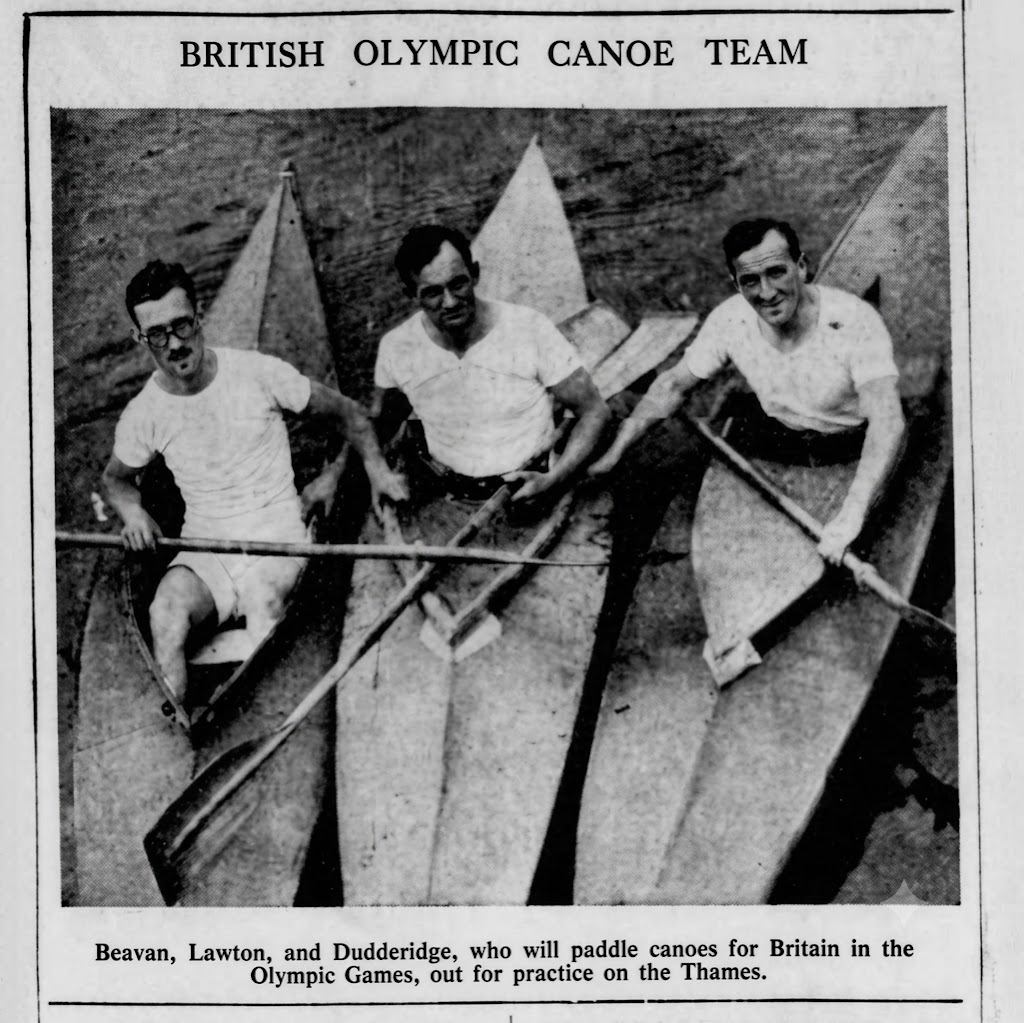
And your grandfather, John, was a canoeist who competed for Great Britain in the 1936 Berlin Olympics, during Nazi rule. Did he ever talk about the Games, and how are your canoeing skills?
I was a bit too young to be taken out canoeing with him but I do enjoy it every now and then and would love to do it more. He was canoeing well into his 90s and he had some legendary tales of travelling around the world, not least the Berlin Olympics where he established the first British canoeing team to compete. He was invited to every Olympics as a guest in the subsequent years.
I’ve still got one of his tracksuits somewhere. He’s a family legend!
Prior to your solo work as Later Youth, you are probably best known as co-singer/songwriter with The Travelling Band, perhaps Manchester’s most underacted act. Are you still in touch with Adam, Nick, Muggers, Spenny, and Stevie Ballanger now? What are they up to?
Yeh, I’m in touch with them all and love them dearly. Adam and I run a studio together called Pinhole Sound Studios and he co-produced my album with me. We’re currently working on a Tom Hingley solo record together which Nick is drumming on.
The Travelling Band never actually broke up and there will be another album which we’re making with Sam Quinn and Harry Fausing Smith.
As for the deserters (kidding), Mugger lives in Australia and has just become a Dad (congratulations mate!), Steve is in Liverpool and has made a couple of great solo albums and Spenny is now a sought after guitar tech for the likes of The Pixies and Johnny Marr.
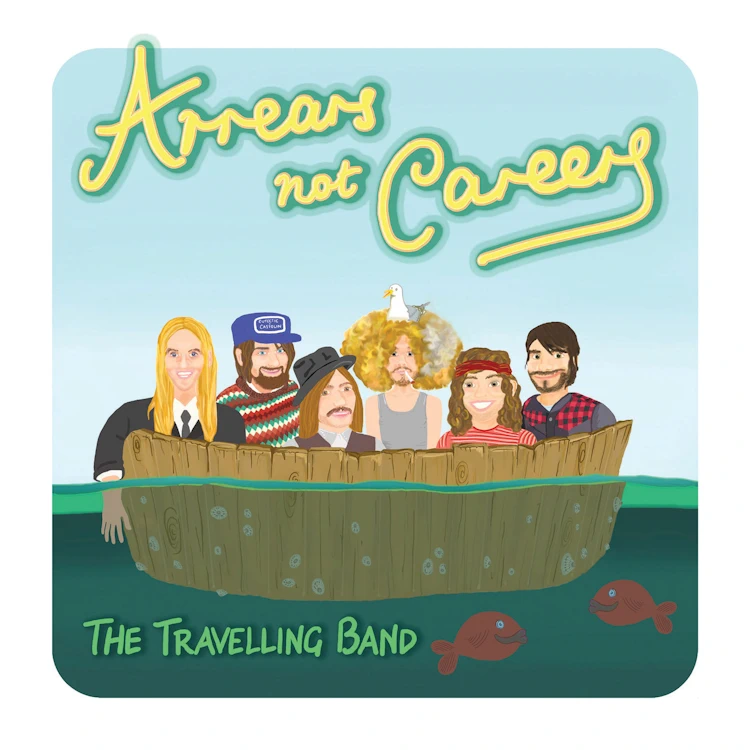
We always found it fascinating that despite winning Glastonbury’s New Talent competition in 2008, your unique brand of ”Mancunian Americana” never received the wider attention that it deserved, and while it would go on to influence other Manchester acts, the media glare seemed to be on comparable West London acts like Mumford & Sons, Noah & The Whale, and Laura Marling, who all appeared a year or two later. Did you ever get frustrated watching their rise?
Comparison is the thief of joy! Everyone knows that London based music gets a better crack at the whip but in the case of those artists they all earned their stripes and deserve all their successes and, to be honest, our careers never crossed back then bar the odd gig or festival.
You can beat yourself up about why your band isn’t as big as it should be, but it’s a waste of energy. We all have our own paths and successes.
In saying that, I can remember watching you play three sold out gigs in Basel, Zürich and Freiburg. I asked other punters how they had discovered you, and the answer was often that they had heard you described on Swiss radio as being the "Manchester Mumford & Sons". While it obviously helped shift the tickets, I couldn’t help but point out you were around before they shot to fame.
The comparison to Mumford was never one we made and I don’t think they did either. I think it’s just a lazy media thing to lump bands together but, if that was their hook, then so be it.
Also, I vivdly remember in Germany having to tell people in the crowd to stop smoking as "the singer only has one lung." I felt like an air hostess on a flight where one of the passengers has a nut allergy, but fortunately people were very considerate.
I remember that Freiburg gig! Not sure I’d make people stop smoking these days but, back then, I was a little more fragile in my voice due to self-inflicted whiskey consumption.
While "The West London Scene" was more of a label than an actual scene, the same accusation could not be made with what was happening in Manchester. You were incredibly influential to keeping that "Manchester scene" alive, picking up the baton from Badly Drawn Boy and Andy Votel’s Twisted Nerve, and later Elbow and I Am Kloot, with your "Shut The Far Cupboard" and "Sideways Saloon" folk nights providing a platform for the likes of JP Cooper, Liam Frost, Ren Harvieu and Chloe Foy to name just a few. Is there anybody who emerged from those nights, you are most proud of or look out for especially now?
The biggest "find" for me was actually an individual called Harry Fausing Smith, who was playing with an excellent songwriter called George Boomsma one night.
Harry later joined The Travelling Band as violinist and sax player, and then became the electric guitarist after Mugger left. He cut his teeth with us and now has become a sought after session musician, playing in Florence & The Machine, MRCY and several other touring bands. We co-write a lot together so he’s a huge part of my life now musically and in the pub.
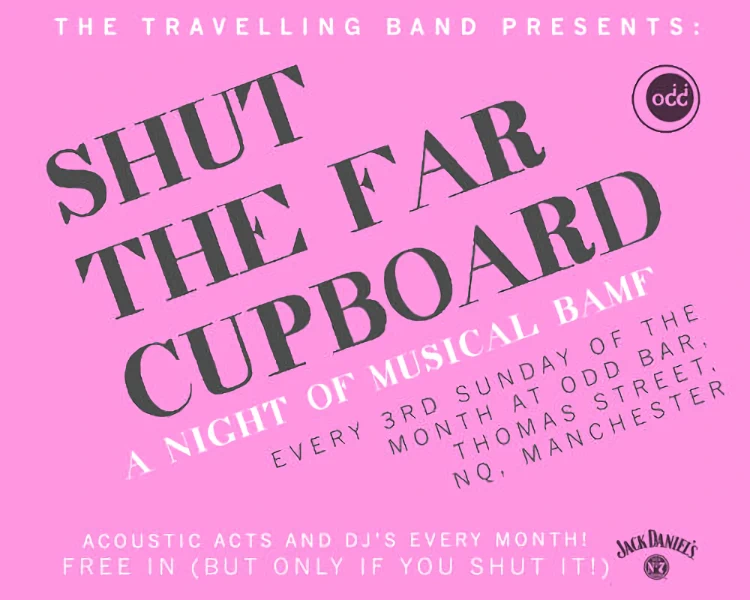
First Aid Kit’s Klara Söderberg, with the late Jo Rose, and Becky Unthank also ran folk nights in the city around the same time – continuing the legacy of Mike Harding’s folk nights in the 1960s and 70s from which Christy Moore emerged. There really felt to be something special going on back then in the early 2000s, and the city almost felt like a village with everybody supporting each other regardless of music genre.
Do you see anybody picking up the baton now, and have you noticed a change now that the city – and number of live venues - has grown somewhat and the way we "buy" music has adapted considerably?
Everything comes in waves and that was a particularly good one like you say. I think The Whiskey Jar open mic ran by Joe McAdam has provided a great community platform for performers for over ten years now which certainly filled a void in the Northern Quarter after we stopped doing ‘Sideways Saloon’ and ‘Shut the far Cupboard’.
Are there any Manchester acts or artists who were ultra supportive in getting your career off the ground?
There was another great harmony band called The Beep Seals featuring Jack Cooper (now Ultimate Painting) and Ian Smith from Alfie who asked us to play a show with them early on at The Roadhouse. I remember being so happy to do a show with them as they were one of my favourite bands. That stuff early on can give you a real lift.
Alfie’s singer turned promoter Lee Gorton got us a lot of opportunities playing in different cities. Musicians turned radio DJ’s like Mark Riley, Clint Boon and Mark Radcliffe and DJ’s like Natalie Eve, Michelle Hussey and Michelle Zenner played a massive role in platforming The Travelling Band early on and we’ll always be grateful.
If I’m honest, not many other established Manchester bands ever asked us to support them. Maybe they thought we'd steal the show... we'd have definitely stolen the rider!
Another advantage of that close-knit community in Manchester back in the late 90s/early 2000s was the eagerness to unite for good causes, and the 2001 "Cohesion" album for Manchester Aid for Kosovo is arguably the best compilation album ever to come out of the city (a who’s who of Manchester music at the time, plus Paul McCartney). You got involved with the charity, including performing at the unveiling of the Parku Manchester (Manchester Peace Park) in Podujevo, and the production of the follow-up Ten charity album in 2011.
It seemed to be, back then, that charity, left-leaning political causes and the Manchester music, comedy, acting and art worlds went hand-in-hand. Are you disappointed that, despite everything going on in the world right now (as referred to in your latest single “All That Remains”), there seems to be less solidarity today. Or do you see things differently?
I think it’s a reflection of the times and waning influence of rock and art on political movements where now the discourse tends to play out online.
That said, established events like War Child do great things. Like a lot of things in the modern age, it’s more compartmentalised and fractured so possibly harder to see as a moment of unity even when there’s great work being done to support worthy causes.
Since the last Travelling Band album in 2017, you’ve worked with an impressive roster of musicians as producer, songwriter and session musician, touring and recording with James Walsh of Starsailor, Stephen Fretwell, Ash and, of course, your long-time collaborator, the incredible Californian folk-rocker, Lissie.
How has it felt to work with so many different kinds of artists after so long in a band of brothers and is there any piece of advice you’ve been given along the way that’s stuck with you?
I really love working with all sorts of different people and I certainly couldn't do that when the band was more active. Co-writing has been a big part of the last ten years and I want to do even more. There’s nothing like a band though and the intensity of those years will be hard to match.
Best bit of advice was never to drive the van over 70mph [the engine once blew up leaving the band without transportation]. We were always late though.
In The Travelling Band, each member contributed to songwriting, bringing their own influences to the table. As a solo artist, as Later Youth, it is fascinating to hear that your own output is arguably even more eclectic – taking in 70s rock, alt-country, folk, blues, and even pop and soul. Have you been conscious of this, and where do you draw your influences both lyrically and musically?
I always try to serve the song so it’s often not premeditated where it goes sonically or stylistically, more of a process of discovery as if it was always meant to be that way. In that sense I just follow my gut. That can lead to a lot of influences coming out but I’ve tried to centre most of the album around my Wurlitzer 200A electric piano to give it a centre.
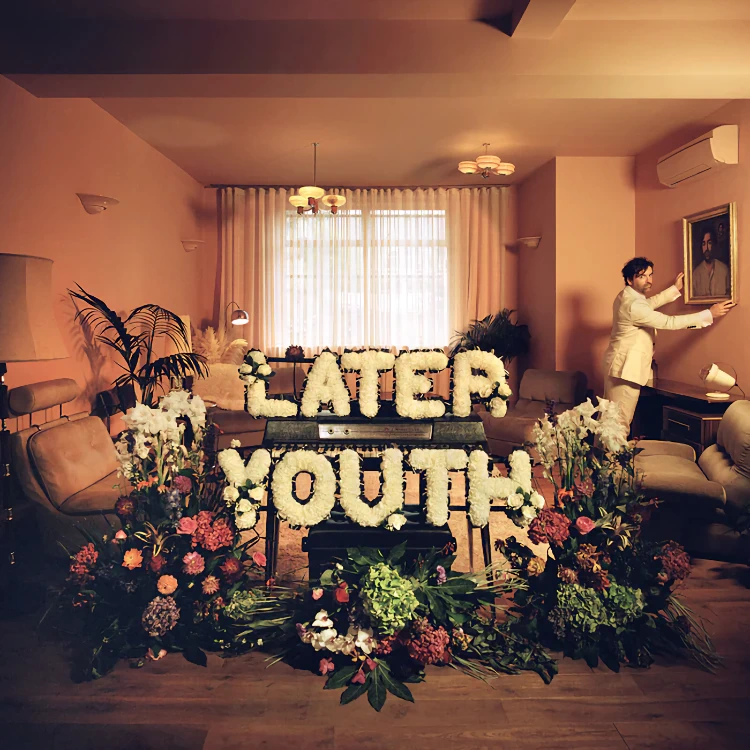
Your album, Living History, has received widespread acclaim and 5 star reviews, with Mojo describing it as "chock full of more hooks and melodies than most indie conventions," but behind the upbeat tunes and your signature Wurlitzer piano there’s actually a lot of sadness and introspective soul-searching within the lyrics and stories behind them. Was this the hardest record you’ve ever had to write, or did the lyrics flow more easily, like a cheaper form of therapy?
I think it’s always therapy and once you write the song you have processed it to an extent and then the song takes on a life of its own and you’re creating a world within it. It doesn't necessarily then have to be an absolute truth, but more of an exploration of a moment in time, a fleeting emotion that moved you enough to sit at the piano and figuratively (and sometimes literally) cry it out.
I didn’t find it hard to write beyond the usual challenges. In fact I think I’m more tuned into the writing process than I’ve been.
Looking back at the period you wrote some of these tracks, does it seem weird having to talk about that experience now in interviews, and is there a danger of opening old wounds?
As you move further away from those experiences it does start to feel more detached. That’s why I called the album ‘Living History’ as it feels like you’re bringing up a lot of old feelings and replaying them on stage. As a songwriter and performer you have to accept that otherwise it’ll do your head in. Songs take on their own life too so they’re less wounds and more like scars that you can indulge in the lore of.
Lissie appears on the brilliant track 'On The Missing' – she’s amazing (as always!) – it sounds like Stevie Nicks fronting the Travelling Band. How was the songwriting/recording process there?
That song was actually written with Nell Bryden and Dolly Mavies in a house in Glastonbury. It was written like an argument (sort of) so seemed appropriate for a duet. I was later making an EP with Lissie and had the vision of a duet so I asked her if she wanted to sing on it and, luckily for me, she said yes. She has a world class voice!
What are you most looking forward to doing/visiting when you’re back in Manchester?
I’m going to nip into Mcqueen on Beech Road to pick up some threads, go record shopping at Piccadilly Records and do some recording at Pinhole Sound Studio. Mainly I can’t wait to see my mates!
And what can fans expect from your upcoming gig at Kamera Ballroom (Fri 12 Jun 2026)?
It’s a killer line up with some insane musicians in my band. It’s a Friday night and so it’ll be suitably upbeat. Maybe I’ll wear a suit!
[Buy Tickets Here]
_____
Also in this series...