Manchester Theatre News & Reviews
REVIEW - To Kill A Mockingbird is a world class production - it will be a sin to miss it!
 BOOK YOUR TICKETS HERE
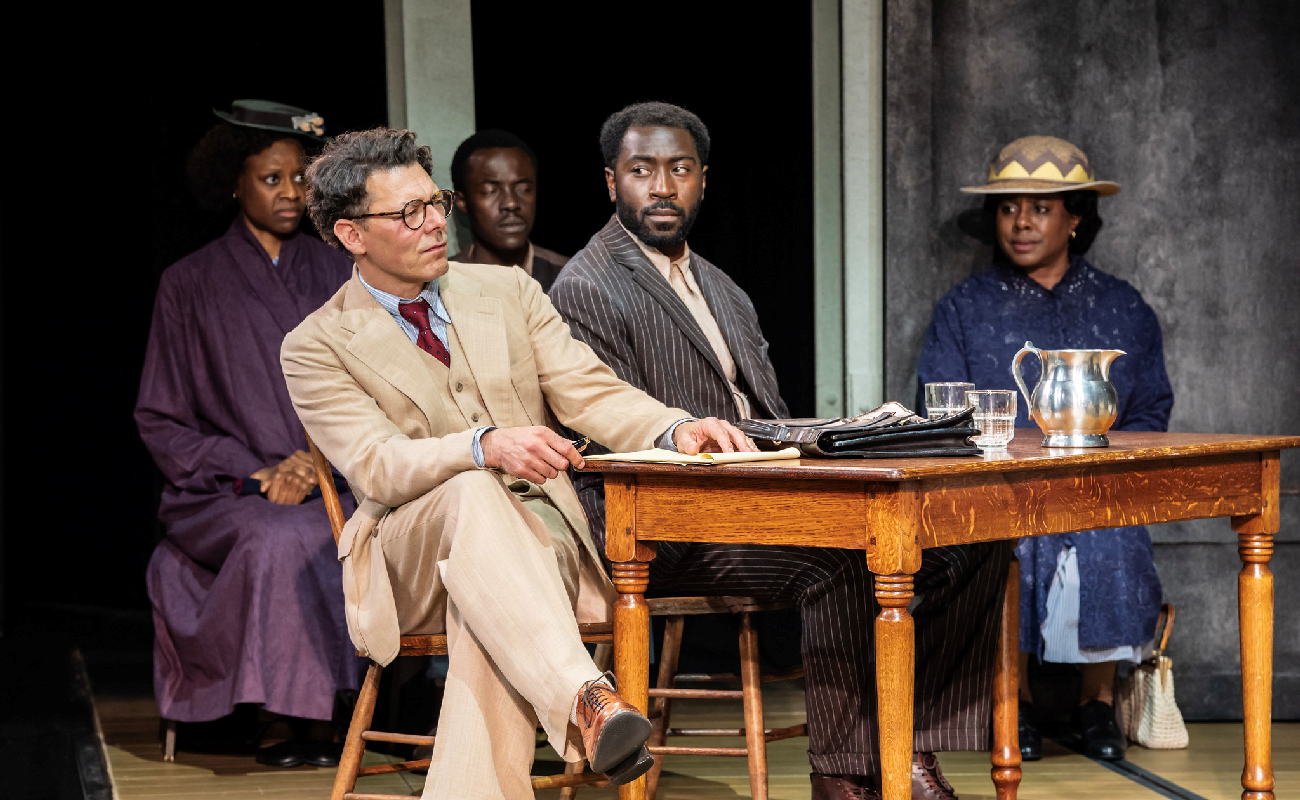
We went to Lowry in Salford to see To Kill A Mockingbird. Read what our reviewer Karen Ryder had to say about this incredibly production...
To Kill A Mockingbird, the Pulitzer Prize winning novel by Harper Lee has been adapted into an award-winning stage play by the equally award-winning Aaron Sorkin (writer of The West Wing, The Social Network, The Newsroom, A Few Good Men) and has been wowing audiences with sell out seasons on both Broadway and the West End. Lowry is thankfully one of the stops on their UK and Ireland tour for this is a production not to be missed. To Kill A Mockingbird has long been one of my favourite books ever since studying it at high school, and I have read and re-read it countless times. It ignites a visceral response, a book that not only tells a story but wakes you up and forces you to feel every single word. It is not passive reading, it is a living phenomenon, that is frighteningly still too relevant today. I always make my way to the theatre when there is a production of To Kill A Mockingbird, yet I have never fully connected with any production I have seen, always feeling a little underwhelmed or like something is missing. Until now.
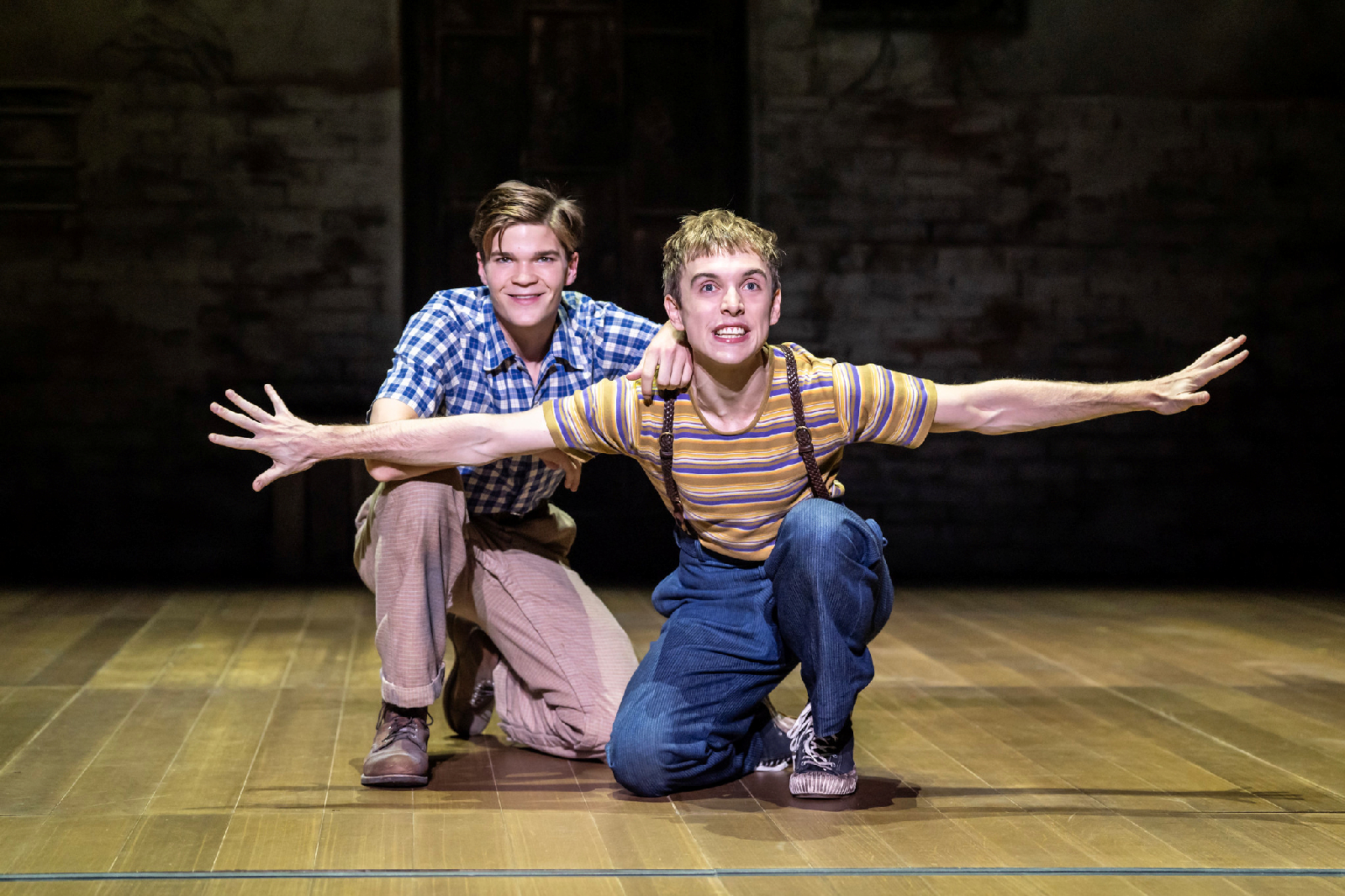
This is exquisite theatre where its characters benefit from a modern exploration, challenging any bias, both conscious and unconscious, and holding up a mirror to white saviour syndrome. Atticus is not untouchable. He is challenged, often by Calpurnia his maid, who is given way more voice in this adaptation and whose perspective of a story based around racial tension is invaluable to counter the otherwise white narrative of Scouts recollections. These characters are defined by their own complexities. They are seen to be flawed, passionate, innocent, ugly, beautiful, gloriously complex and opposing. Directed by the award-winning Bartlett Sher (The King & I, My Fair Lady, South Pacific) this production skilfully finds the humour in everyday humanity, whilst carefully nestling it against the unlaughable and the unthinkable. It demands your attention, making you bare witness to the toxic capabilities of the human race, then melting your heart at the juxtaposed innocence of Scout, Jen, and Dill. Their naivety is beautiful and makes their words of unintentional wisdom all the more profound for it.
A story of racial tension set in America’s deep South in the 1930’s, To Kill A Mockingbird follows the fate of Tom Robinson, an innocent black man who is accused of the rape and assault of a white teenage girl. With no evidence to support Tom being guilty, or to even support that the rape took place, his Lawyer Atticus Finch pleads to the fairness of the Jury, an opportunity for change that escaped every single one of them. One honest, yet dangerous answer from Tom and his fate was inevitable. Following the trial, tensions build to boiling point resulting in the unprovoked attack of Atticus’ children, and a crossroads of morality for Atticus. Told through the eyes of Atticus’ children, Scout and Jem, and their friend Dill, they recall that life changing summer, and we are contoured through Tom’s trial in fragments as their childlike minds wander in and out of other memories and happenings of that summer, such as their strange interactions with the local recluse Boo Radley, starchy interactions with their cross tempered neighbour Mrs. Dubose, pageants, and childhood games such as Tom Sawyer. To Kill A Mockingbird is known for its themes of prejudice and racism, justice and injustice, morality, and standing up for what is right, not what is easy. Themes often underplayed in stage adaptations, perhaps because of time constraints, are the brutal transitions both Scout and Jem have to experience. They are forced into adulthood and the loss of their childhood innocence through circumstance, rather than a natural progression, learning how ugly the world can be and discovering their hero, their father, perhaps can’t always protect and make things right. They sadly learn that the world often lives in a place where doing the right thing is often the hardest thing and does not always bring the correct and fair result.
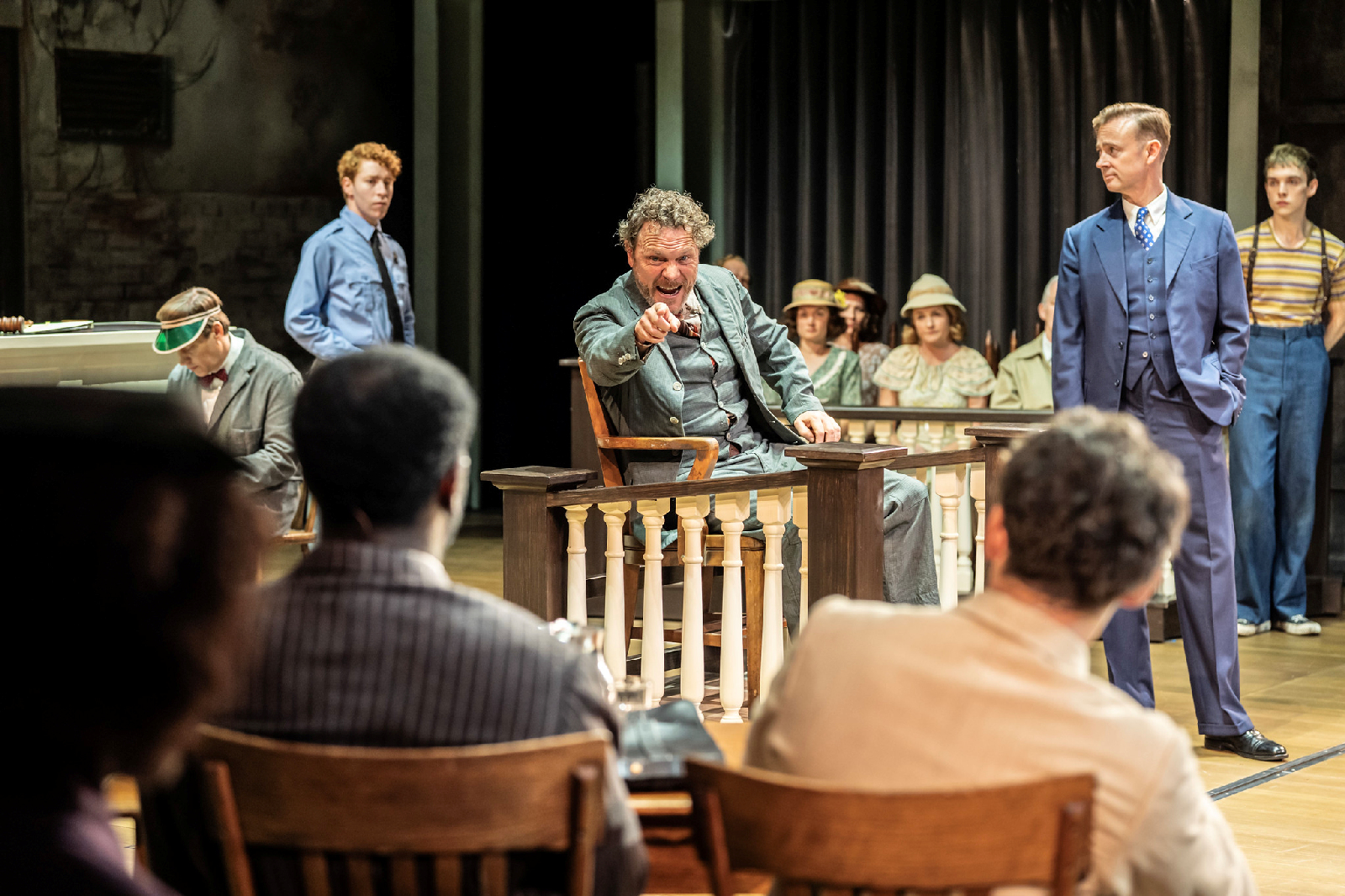
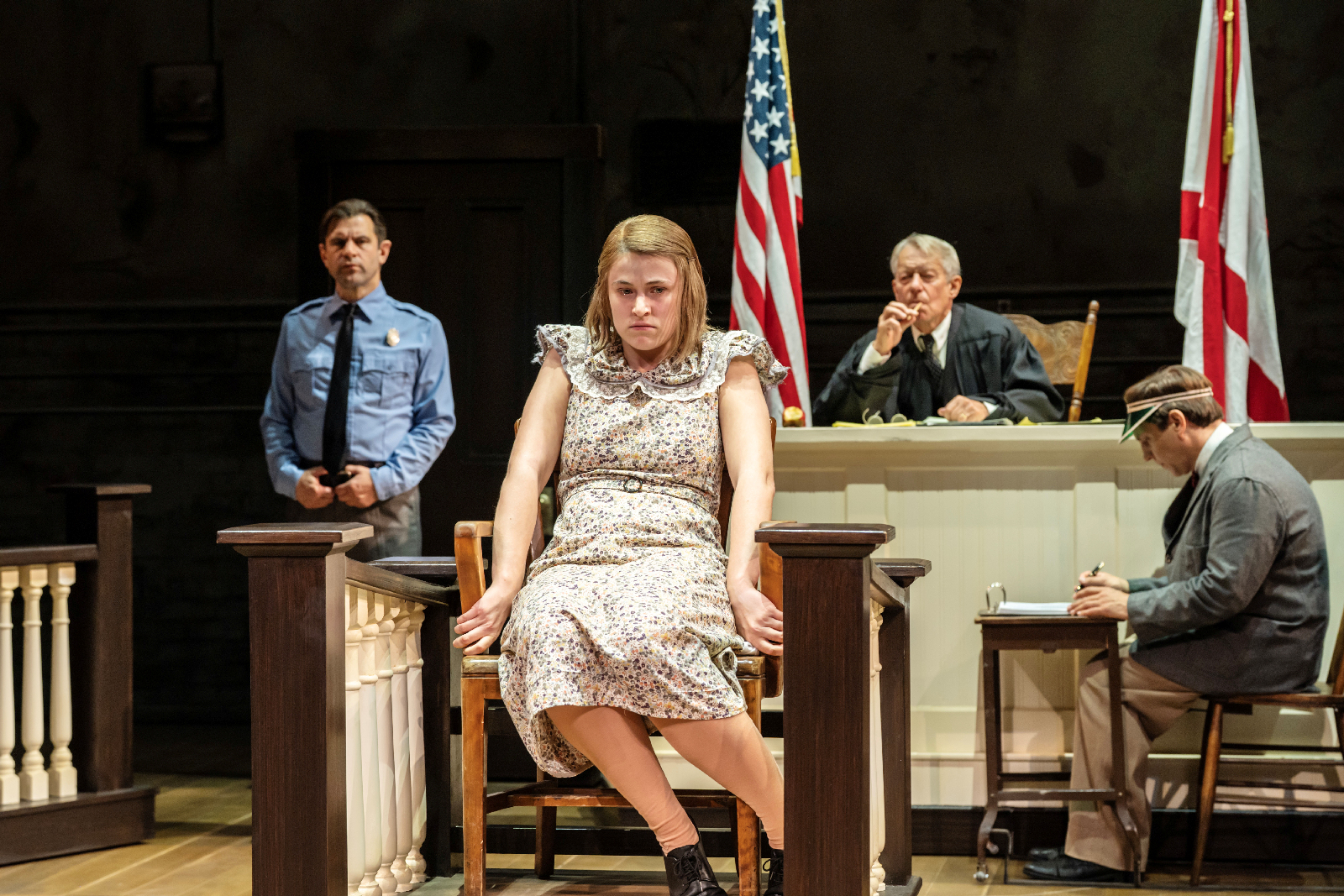
This production thrillingly showcases these themes as the pulsing heartbeat and core of the story. For me, this has always been vital, else why tell the story through the eyes of Scout? Her naivety makes the hypocrisy, the injustice, the prejudice of the adult world explode, highlighting the juxtapositions of innocence verses corruption, and allowing us to strip away the layers of learned prejudice, conscious or unconscious, and start afresh with an unfiltered perspective. Bartlett Sher’s direction of Aaron Sorkin’s adaptation is sensational, making every word, every breath of this heartfelt story a triumph. This is a production that wakes you up and makes you, to quote Atticus, “walk in someone else’s skin.” The ripples of inherited and learned prejudice are visible throughout, shown with excruciating clarity as the young, vulnerable and abused Mayella sits in the witness box spewing racial hate, a haunting echo of the exact speech her father previously vomited to Atticus. Do we feel disgust towards Mayella for such poisonous words, or see her as a victim herself? A vulnerable child groomed into a world of racial toxicity?
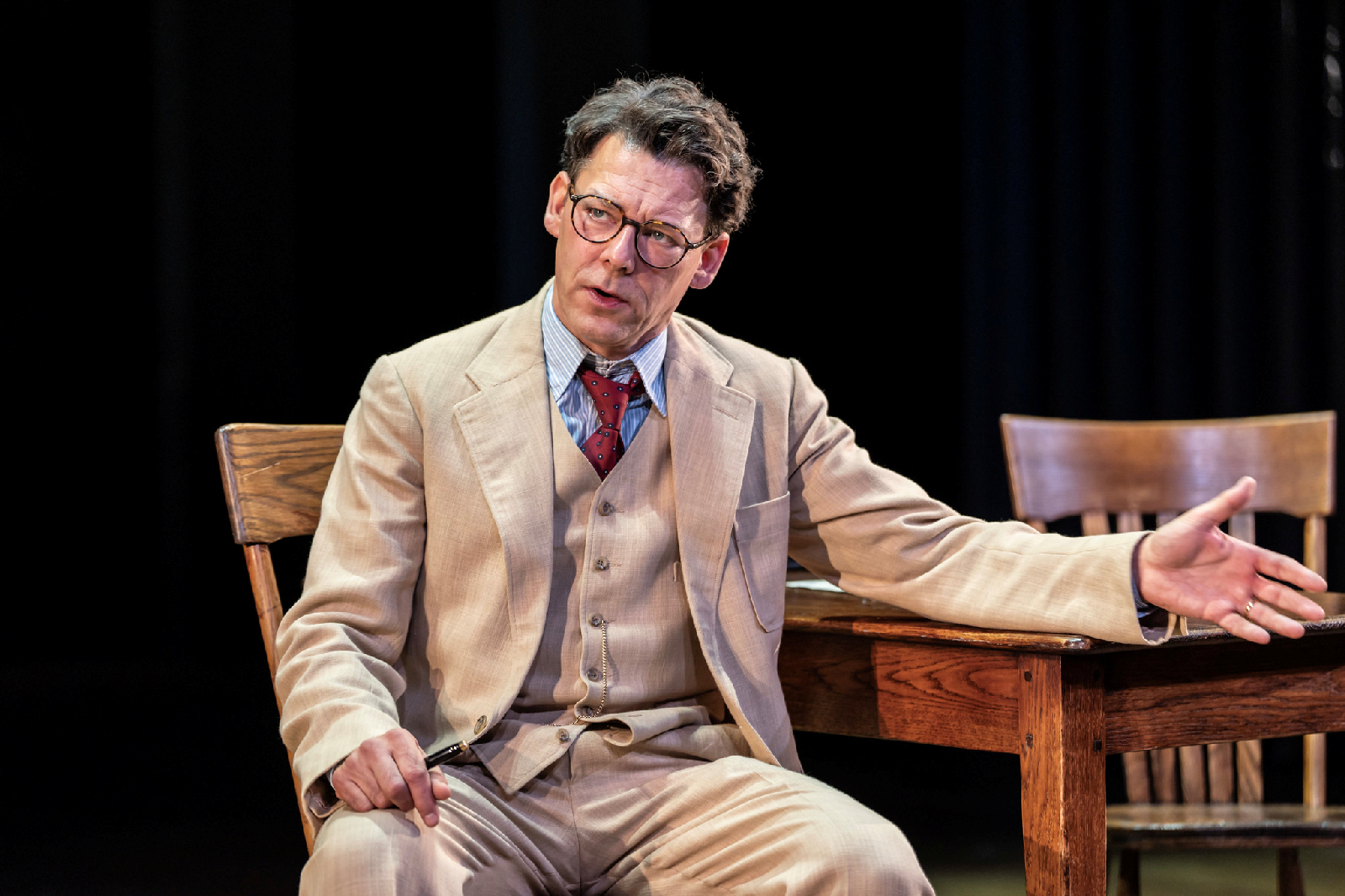
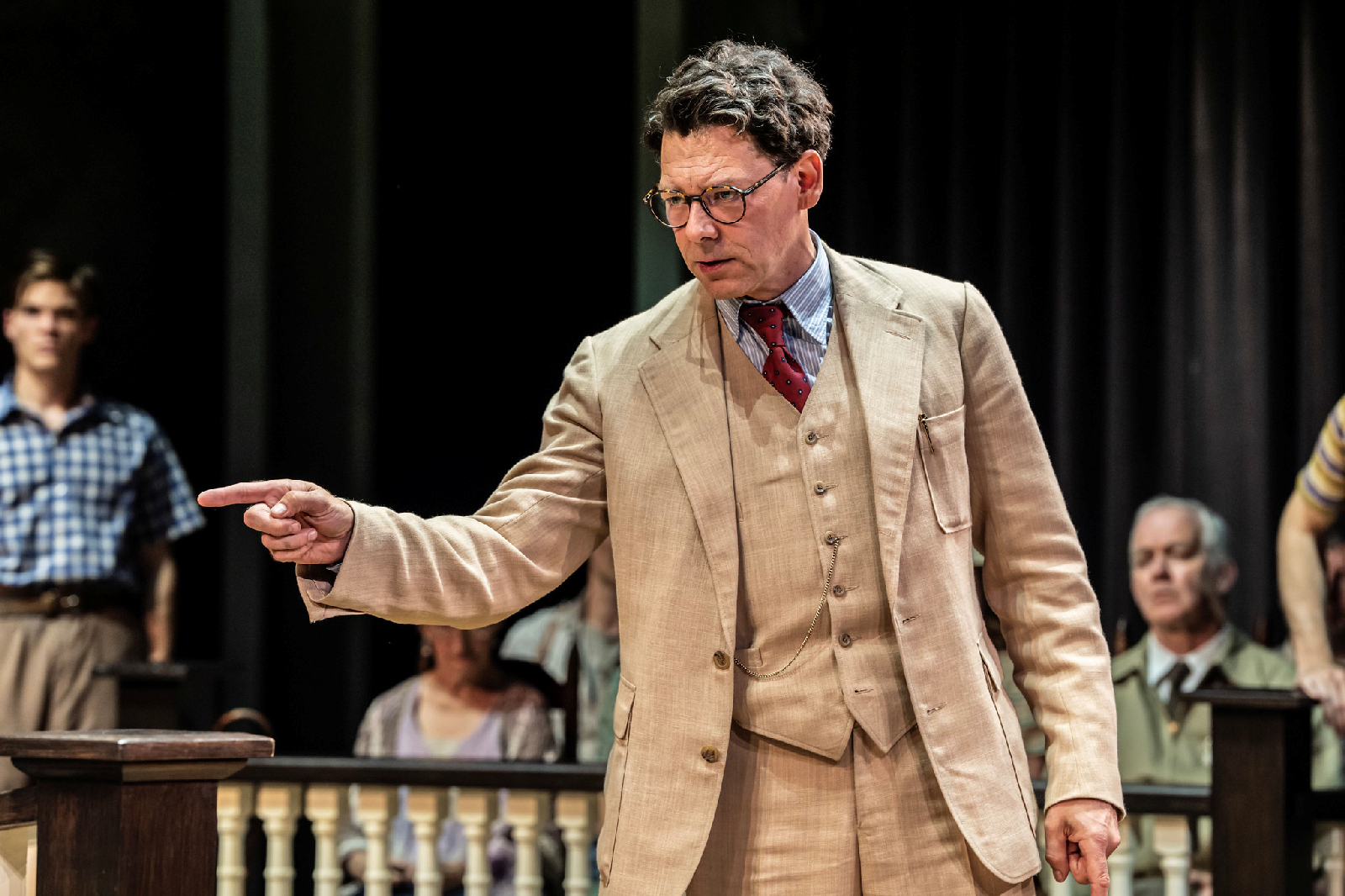
A definitive story demands definitive acting, and just as Scout beautifully takes the courts formalities of “all rise” turning it into a poignant request of humanity, this phenomenal cast equally “all rose” to the occasion, creating an unforgettable and outstanding masterclass in storytelling, character, and connection. With a few changes to the main cast this evening, our dignified Atticus Finch was brought to life by John J. O’Hagan. Authenticity permeated his entire being. Calm and cool with the rumblings of frustration slowly bubbling away underneath, as his own, perhaps naïve beliefs, that there is an overriding goodness in everyone. There may be goodness in everyone, who knows, but it often takes second place to herd mentality. John J. O’Hagan delivers a tortured internal struggle of Atticus as his own belief system in the law and his community is shattered, resulting in his client paying the ultimate price. We see his desire to be the best parent, trying to raise his children with honesty and respect, but missing that in teaching them to respect all, even those who are vile, he is perhaps disrespecting those who are impacted by the vileness. We see a character who tries to be fair and just, but still has room to grow, not the perfect Atticus portrayed by so many others, and this makes him real, believable, human.
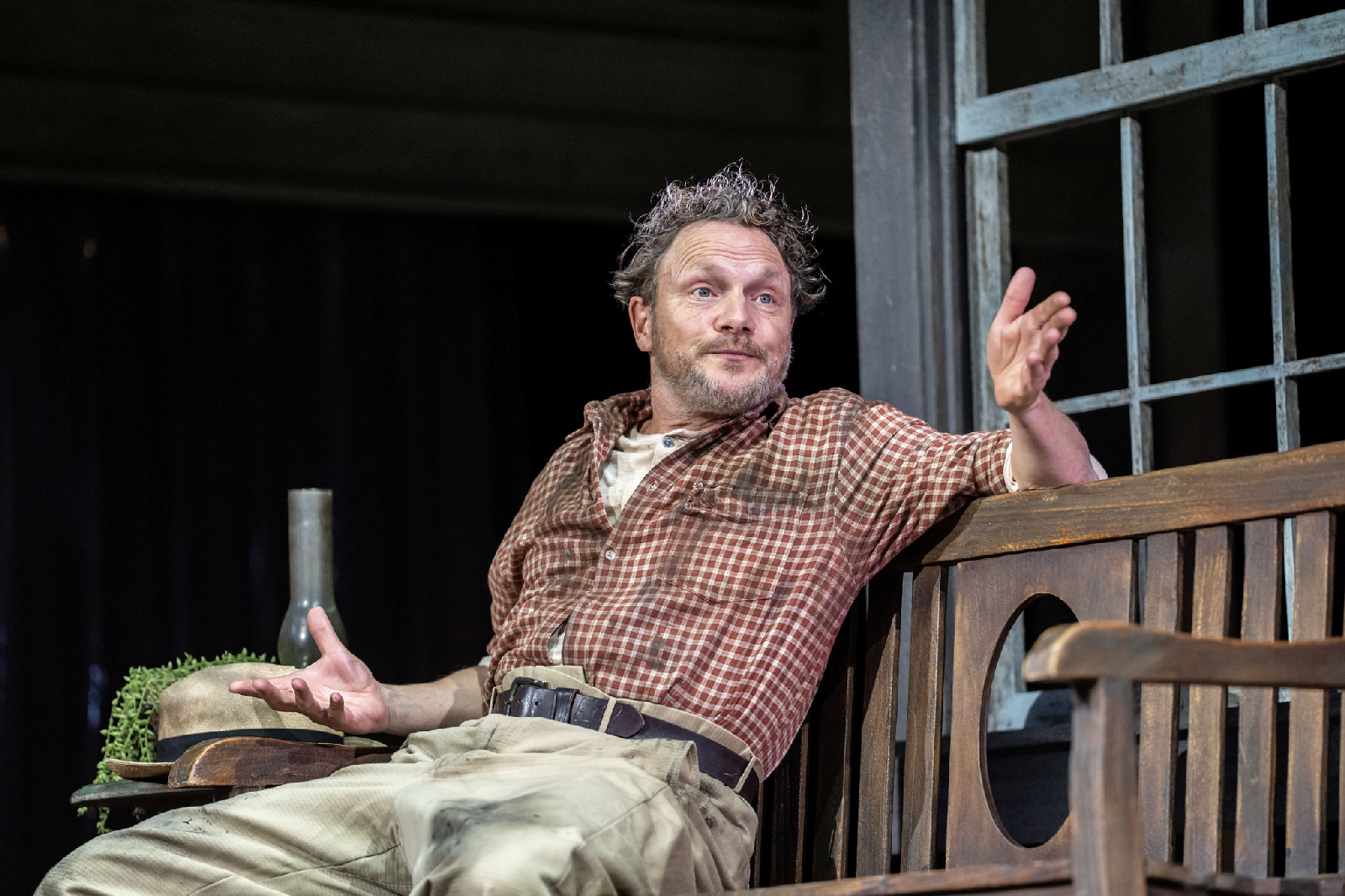
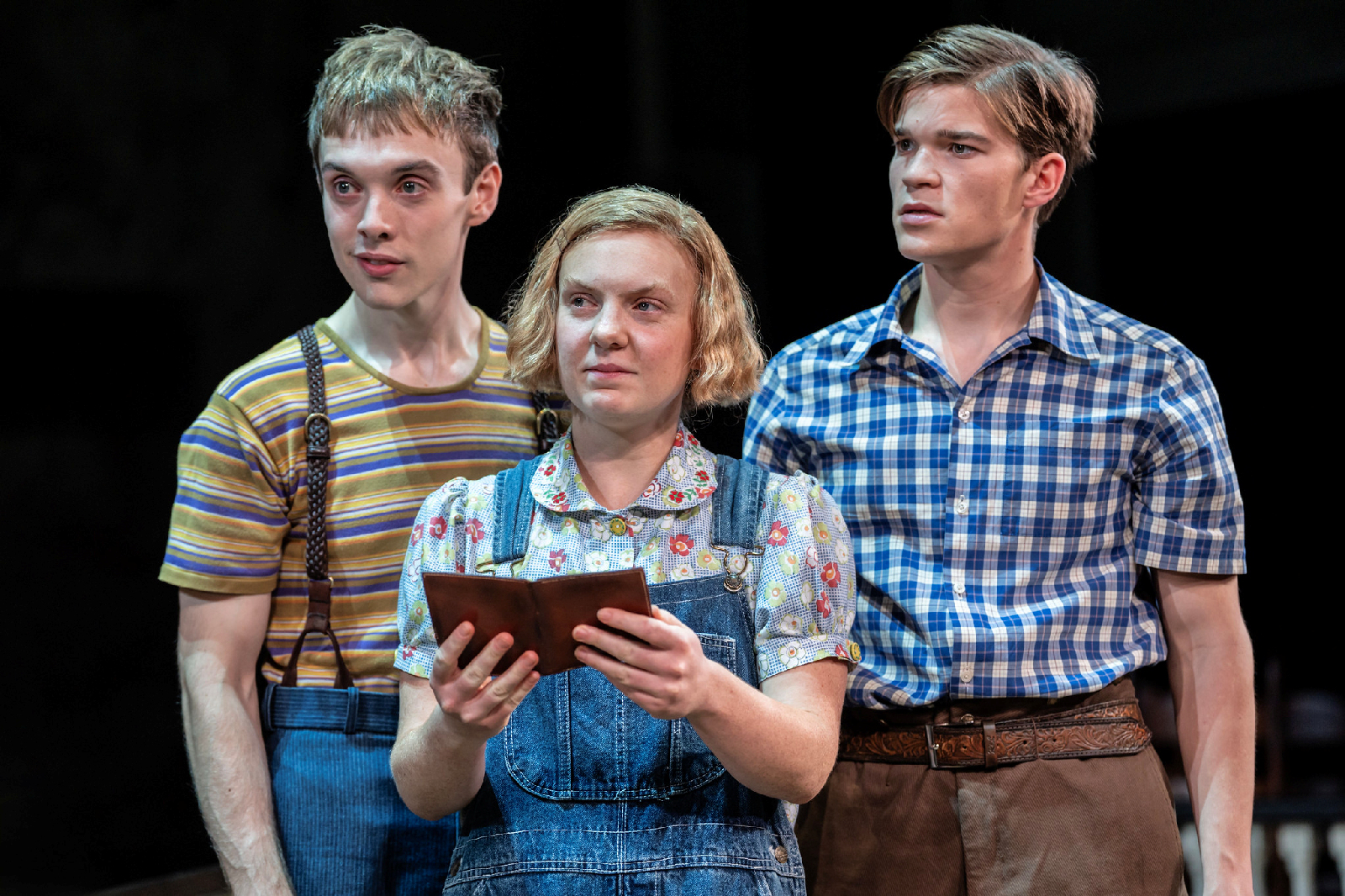
Anna Munden as Scout perfectly portrays this feisty, innocent character, wanting so much to grow up without any real understanding of what that brings. She has mastered the element of showing Scout’s youth without making it cliché. She chooses not to alter her voice, but instead her movement, giving us a character who is not entirely in control of her own limbs yet, moving around with that slightly awkward innocence, flailing limbs, and unable to hide every single thought and emotion from her face. It is captivating, beautiful, heartwarming, and brilliant. Similarly, Gabriel Scott as Jem Finch allows his character to adopt that unenviable transition between boy and man, not quite one or the other, thinking he knows more than he does, until one day, it creeps up and we realise he is no longer a child in mind. Unafraid to challenge Atticus, he does so with a loving defiance rather than disrespect, and he somehow managed to create such a wonderful character that we could completely see the boy he was, and the man he would become. Dylan Malyn as Dill made me fall in love with this lost child who needed love, reassurance, and nurturing. Often deemed the slightly irritating neighbour who came to visit for a summer, this interpretation made Dill an audience favourite with his wide eyed loving nature, and a heartbreaking backstory that slowly comes out through the most tender interactions with Atticus. He brought a gentle and loving humour, a sweetness against the ugly, and an eagerness to please in return for affection and friendship. But Dill is wise beyond his years, a wonderful quality born through the sad circumstance of neglect leaving him nothing to do but read and learn.
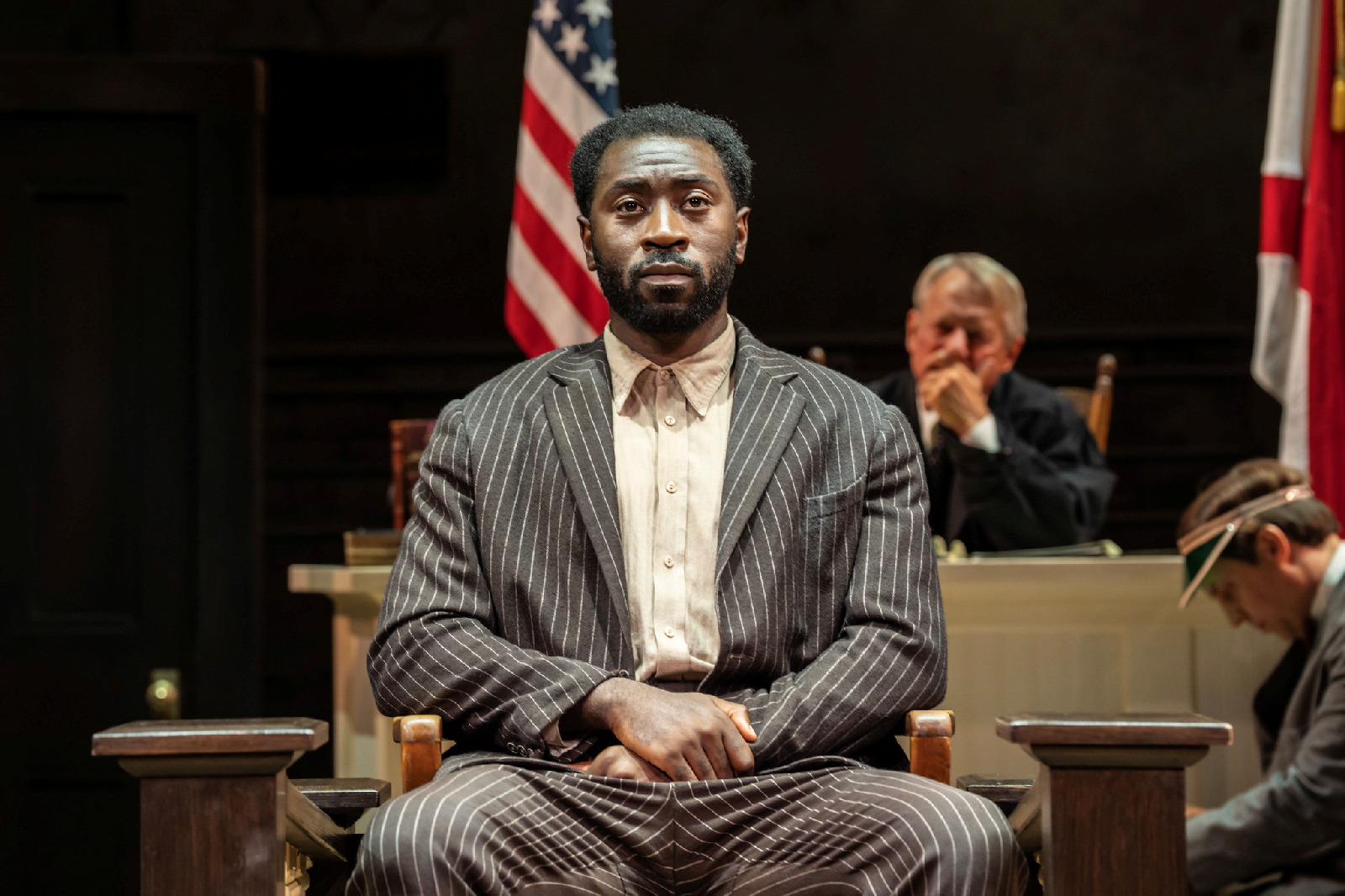
Andrea Davy as Calpurnia is outstanding too, and through this adaptation, is given the opportunity to allow everyone to hear what she thinks and feels about the racial tensions, bringing much more balance. She admires Atticus for the things he knows but equally calls him out for the things he doesn’t, and for his expectation that she should be grateful for defending Tom Robinson. She achieves this with such dignity and poise that it thankfully made me look at this story in a new light, and acknowledge that this wonderful classic about the injustice of racism is told entirely through the eyes of white people, not the lived experience of those who have to live through it, live with it, and live in it. This was an entirely classy and educational performance. Aaron Shosanya as Tom Robinson displays the same quiet dignity, managing to remain calm, measured, and controlled as he is wrongly accused of the most inhumane things, and surrounded by visceral hate. It is both humbling and heartbreaking, knowing he remains calm not just because of his nature, but because if he were to display the kind of raw emotion and opinion so freely available to Bob Ewell, it would be game over. And eventually, it is. He chooses freedom of speech, which ironically costs him his life, yet Bob Ewell and Mayella are entitled to spew out whatever they like, in comparison. Oscar Pearce as Bob Ewell and Evie Hargreaves as Mayella Ewell do a jarring job of their antagonistic, racist, lying, foul characters. They made me feel incredibly uncomfortable and so they should. It cannot be easy to portray such loathsome characters leading the charge on such sensitivities, particularly with the current political climate, but they were outstanding. The entire cast were exemplary and I could write realms on each and every performance.
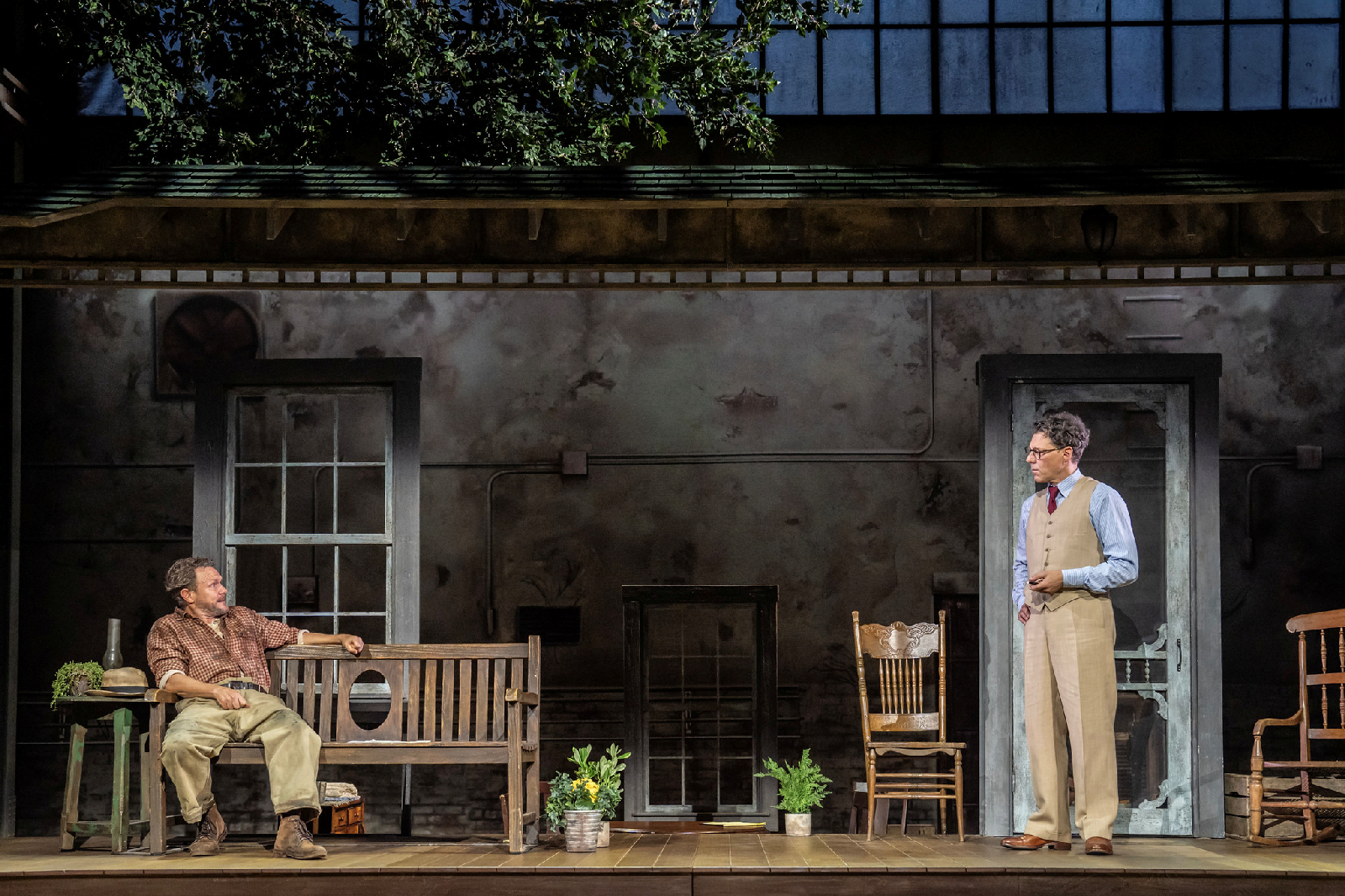
The set, designed by Miriam Buether, was plentiful and lavish yet simple and unobtrusive. It fluidly transported us with large rolling sets from Atticus’ front porch, to the courtroom, the upstairs of his home, and beyond, with detailed and evocative pieces that captured the mood, the message, and the essence of each scene. To Kill A Mockingbird may follow the injustice bestowed upon Tom Robinson, but it has a much wider story to tell. With a hard hitting and unapologetic spotlight burning fiercely onto the noxious prejudice stains of this world both past, and sadly present, it explores how injustice, ignorance, and mob mentality spreads. As stated in the production, ‘mob mentality is where the conscience goes for a holiday,’ and now more than ever, we must pay heed to this warning. With such a world class production, it’s a sin to miss this Mockingbird.
WE SCORE TO KILL A MOCKINGBIRD...
To Kill A Mockingbird is on at Lowry, Salford until January 24th 2026.
BUY TICKETS TO SEE TO KILL A MOCKINGBIRD